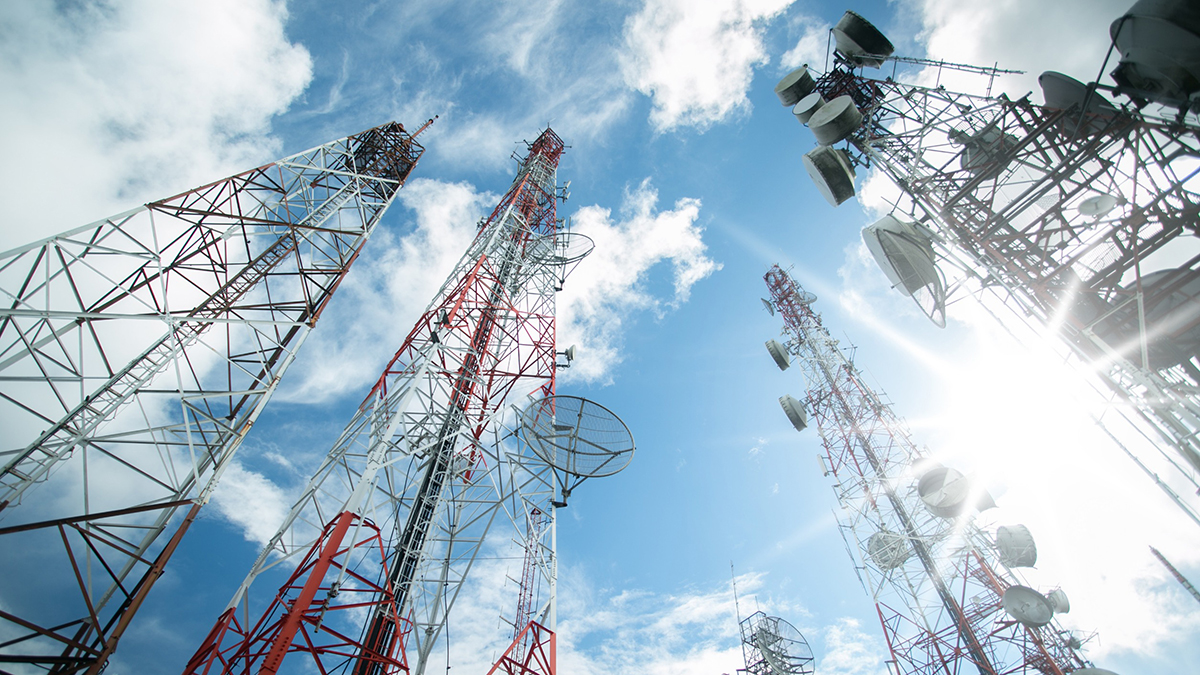

Telecoms operators experienced a “pivotal” year.
South Africa’s mobile network operators (MNOs) reported a strong 2025, leveraging technologies such as artificial intelligence (AI) and preparing for further network investment in 2026.
ITWeb spoke to the operators about their key milestones, regulatory developments and expectations for the year ahead.
Byron Kennedy, spokesperson for Vodacom, said a key milestone for the company was “delivering an excellent start to Vision2030, supported by strong interim results and robust group service-revenue growth.


“With our ambition to increase our customer base to 260 million and financial-services customers to 120 million by FY2030 and having already reached 223.2 million customers and 93.7 million financial-services users, we are firmly on track to deliver long-term growth, while advancing digital and financial inclusion,” he added.
Kennedy highlighted mergers and acquisitions as another major development, including the closure of the Maziv transaction and the proposed R36 billion Safaricom deal.
“Our 30% joint controlling stake in Maziv will accelerate fibre rollout, enhance network quality and expand access to affordable high-speed connectivity. The Safaricom transaction, once approved, will increase our stake from 35% to 55%, strengthening our position in one of Africa’s most dynamic telecoms and fintech ecosystems.”
Vodacom also invested R23 billion in network and digital infrastructure, supporting 4G and 5G rollout, network resilience, and cloud, IOT, and enterprise services.
According to Kennedy, the company became the first in SA to implement virtual wheeling, and its power purchase agreement with SOLA Group marked a step forward in large-scale renewable energy.
MTN South Africa described 2025 as pivotal. “A key highlight was the acceleration of our fixed-wireless and fibre-led broadband strategy, growing home connectivity and expanded access to underserved communities,” the company told ITWeb.
It also reported progress in fintech and platform services, customer experience improvements and AI-led digital tools.
MTN conducted several 5G-Advanced trials with ZTE and completed what it describes as Africa’s first satellite-to-smartphone voice call in Vryburg with Lynk Global. At group level, MTN surpassed 300 million subscribers across its markets.
Telkom said 2025 was a year of stabilisation and disciplined growth. “Our interim results reflected improved EBITDA, stronger cash generation and continued momentum in mobile and fibre,” said spokesperson Mooketsi Mocumi.
The telco focused on network simplification, cost-efficiencies and AI-led operational transformation, while engaging in B20/G20 digital policy discussions, he noted.
Looking ahead, Telkom expects 2026 to focus on consolidation and scaled growth. “Mobile and fibre remain strong engines, BCX continues shifting toward higher-margin digital services, and our balance-sheet discipline positions us well for continued investment in 5G, fibre densification and cloud-led infrastructure,” Mocumi said.
MTN expects continued network transformation in 2026, with plans to scale AI-driven operations, extend 5G coverage, and modernise its core network. “We anticipate strong demand for home connectivity, enterprise managed services, fintech, cyber security and cloud solutions, as customers adopt more digital lifestyles and businesses intensify their digital transformation,” the company said.
Vodacom said AI and satellite connectivity will be key drivers of innovation next year. Kennedy noted that AI “enables a level of personalisation and operational intelligence that was just a dream a few years ago. It will allow us to serve customers with even better relevance and simplicity,” while satellite technology could extend connectivity to remote areas.
“Our customers are going to expect a new level of personalisation. They want services that feel as if they were built specifically for them, and they want the experience to be seamless. The real value comes from interactions feeling intuitive. With the progress we are making in AI and data, the focus is shifting. It’s moving from fixing things quickly to proactive care or fixing problems before it even annoys a customer.”
On the regulatory front, Kennedy noted the Department of Communications and Digital Technologies (DCDT) allowed operators to set their own schedules for sunsetting 2G/3G networks. ICASA also approved the Vodacom-Maziv deal.
“Vodacom Group CEO Shameel Joosub has emphasised that the transaction will accelerate fibre expansion, bridge South Africa’s digital divide, and contribute to job creation,” Kennedy said. He added that ICASA is progressing on satellite licensing and Individual Electronic Communications Network Service licences, and is reviewing End-User and Subscriber Service Charter Regulations, mobile market regulations and number-activity rules.
MTN reported active engagement with DCDT, ICASA and other government departments on market consolidation, infrastructure deployment, ICT policy review, transformation, rural connectivity and service quality.
“The evolution of the regulatory environment remains critical to fostering innovation, fair competition and long-term sector sustainability,” MTN said.
Telkom said it expects further progress in 2026 on spectrum licensing, RICA modernisation and the recognition of equity equivalent investment programmes within ICT sector codes.
Regarding AI, Mocumi noted that it has become integral to telecom operations. “For Telkom, 2025 saw us achieve a key AI milestone. We introduced our group AI framework, giving the organisation a clear, ethical and scalable way to unify, regulate and control the proliferation of AI across the business.”
Kennedy highlighted AI’s transformative potential across Africa. “Ultimately, AI has the potential to lead to broader economic growth and shared prosperity. In this regard, artificial intelligence offers a transformative opportunity for Africa by fostering growth, enhancing productivity and broadening access to essential services,” he said.
For MTN, AI has been central to improving network optimisation, predictive maintenance, customer service automation, fraud management, and enabling smarter homes, connected enterprises, and more resilient networks. “Our recently announced partnership with Microsoft further emphasises our commitment towards AI technology,” MTN said.
Cell C had not responded to ITWeb’s request for comment by the time of publishing.