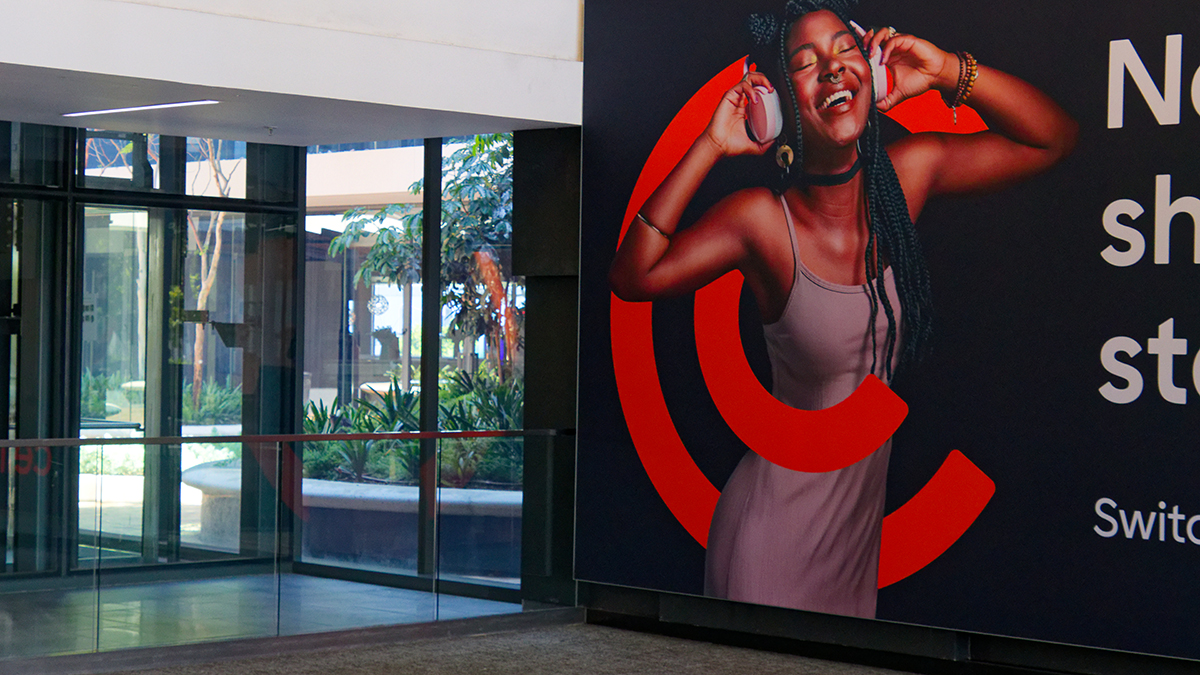

Cell C headquarters in Midrand. (Photograph by Nicola Mawson)
Cell C is set to follow the same capex-light model that it does for cellular services when it expands its fibre offerings – partnering with open access companies.
CEO Jorge Mendes says the company, which turned its first profit earlier this year ahead of a 27 November listing, sees the next wave of growth in broadband for operators coming from underserved areas.
“We think there will be a lot more connectivity done in townships with WiFi. In the rural areas, you’re seeing that with the fibre companies,” says Mendes during a conversation with ITWeb about its strategy post-listing.
Increasing its fibre offering is on the cards for the operator, which has around seven million subscribers, though no specific timeline has been announced. Mendes says the market is shifting towards fibre and Cell C does not want to metaphorically be “the last ones standing there with steel towers and lease agreements”.
Cell C already markets a fibre-to-the-home service called C‑Fibre, enabling customers to get uncapped fibre internet via fibre networks operated by independent fibre network operators.
See also


The operator will not be laying fibre to capture new markets, instead using fibre providers “as partners where we need access to connectivity and transmission,” says Mendes. “We don’t intend to lay fibre, so that’s not our strategy at all.”
Peter Takaendesa, chief investment officer at Mergence Investment Managers, says mobile operators are concerned about over-building in the fibre market if they also start to develop independent networks to compete with Openserve and Maziv.
As a result, Takaendesa says, it’s better for companies to acquire shareholdings in the existing fibre networks and contribute growth capital, or just become what is effectively an internet service provider for them.
Cell C runs on what it calls a “capex-light” model, enabling it to roam on Vodacom and MTN networks and rather invest in customer-facing offerings such as physical outlets. Vodacom and MTN spend billions each year on network infrastructure, such as 4G and 5G site deployments and upgrades.
The model, introduced in 2021, resulted in it either selling or disassembling 5 500 sites, as it would not be sustainable for it to fund a project that would allow it to catch up with its biggest competitors in terms of network equipment. It now has access to close on 30 000 sites.
Mendes says the company is in favour of Vodacom’s R14 billion deal to create South Africa’s biggest fibre company after it bought out Dark Fibre Africa, Vumatel and Maziv from Remgro.
While this will give Vodacom “a very strong fibre asset” − as long as Maziv remains open-access − Cell C will be happy to partner with it to increase its footprint. “It’s encouraging competition rather than the other way around,” he says.
After years of regulatory hurdles, the Competition Appeal Court approved the long-delayed R14 billion deal in August. As part of the merger conditions, Maziv committed to spending at least R12 billion over the next five years, earmarked for broadband infrastructure expansion and maintenance, particularly in underserved areas.
Data and analytics company GlobalData said on Monday that fixed communication services revenue in South Africa is expected to grow at a compound annual growth rate of 4.1% between 2025 and 2030.
Broadband, led by fibre-optic to the home or business, and accelerating fibre rollouts, will be the primary growth engine, while fixed wireless access offers an important complementary route in underserved areas, says GlobalData.
“Fibre lines accounted for about 65.3% share of total fixed broadband lines in 2024 and will remain the leading broadband technology through to 2029,” says Neha Mishra, telecom analyst at GlobalData.
“We’ll continue to partner where necessary,” says Mendes. “We’ll continue to use Maziv and Vodacom where we need access to connectivity and transmission… That’s our strategy moving forward.”