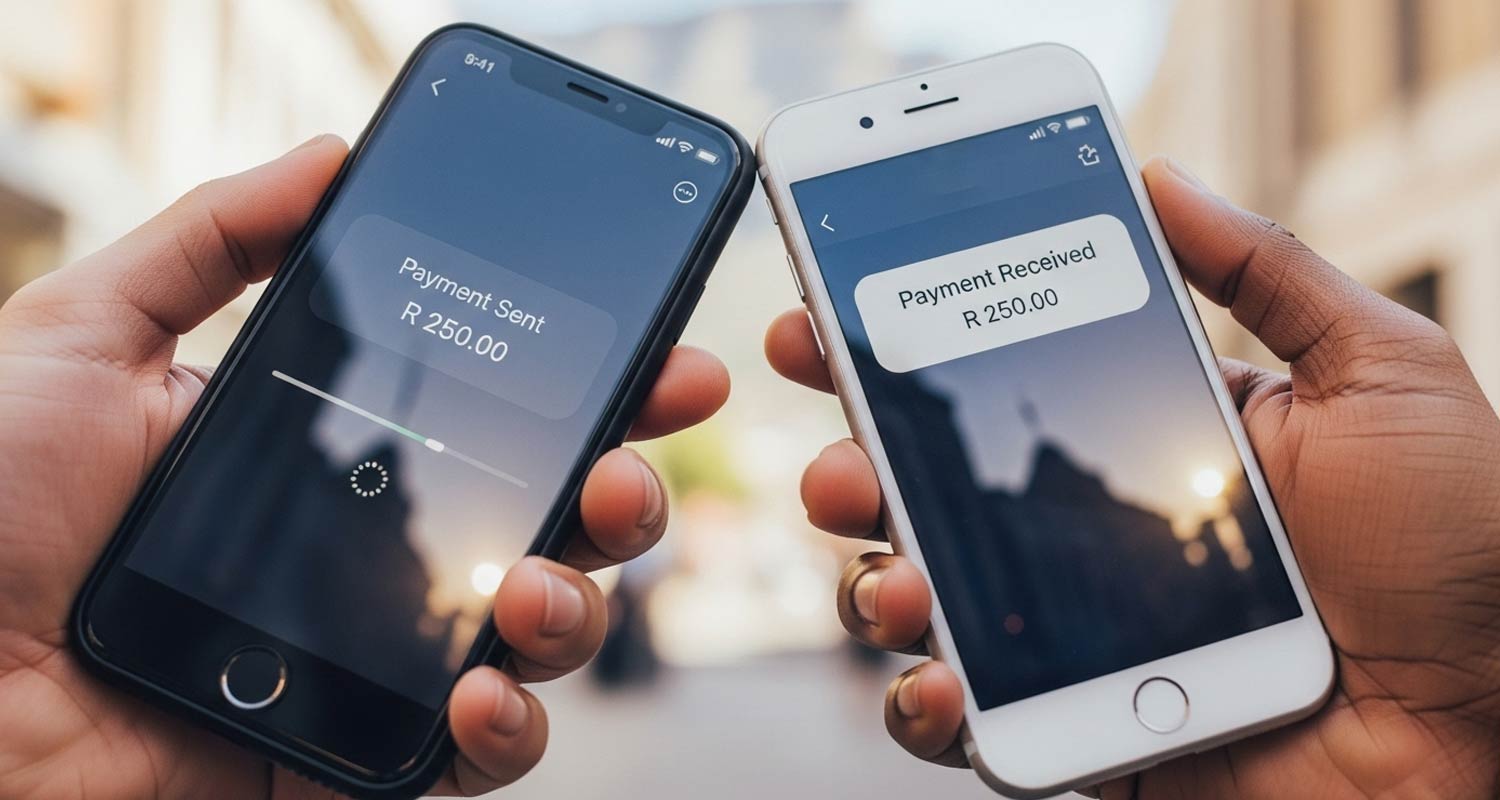
The start of year found PayShap firmly embedded in any payment conversation. When it launched in 2023, everyone in the landscape was asking: would it scale effectively, would consumers embrace it and would banks fully participate? Now, at the end of 2025, consumer interest has grown. But are transaction volumes as expected.
Operated by PayInc (formerly BankservAfrica), PayShap has processed more than 461 million transactions worth about R403-billion since its debut. Yet as 2025 closes, there are plenty of discussions around fees, inclusion and bank adoption.
Finch Technologies and Slant (South African data aggregators) set out to explore these dynamics: how fees differ between banks, why adoption varies so widely and whether PayShap’s core mission – greater inclusion and faster payments with lower costs – is being realised.
PayShap was designed as a low-cost, real-time payment system, linking users’ phone numbers (ShapIDs) to their bank accounts for simple peer-to-peer transfers. Infrastructure roll-out has been strong: most major banks are on board and transaction volumes continue to rise. But what does the data actually show?
Using a sample of over 228 000 consumer bank accounts from June, Slant analysed more than 9.8 million transactions across various banks and found 88 000 had a PayShap payment. Here’s what their data found.
Uptake across banks
- Absa: 68% of customers used PayShap at least once, contributing 6.9% of total debit transactions.
- Capitec: 35% of customers used PayShap in June, accounting for just 2% of debit transactions.
- Discovery Bank: 64% of customers used PayShap, representing 6.1% of debit transactions.
- Standard Bank: 57% of customers used PayShap at least once a month, yet these transactions made up only 4% of total debit transactions for this bank.
PayShap adoption is growing, but sustained, frequent usage remains low across all banks.
Most common PayShap fees and payment amounts per bank
- Absa: Most common PayShap fee – R7.50, aligned with the communicated consumer fee, with the most common payment amount at R385 – the highest amount by bank.
- Capitec: Most common fee – R6, slightly above the stated maximum R3 fee; most common payment amount – R350
- Nedbank: Most common (and highest) fee – R10
- Standard Bank: Most common fee – R7, consistent with its fee structure; most common payment amount – R300
| Bank | Fee | Amount |
| ABSA | R7.50 | R385 |
| Capitec | R6 | R350 |
| Nedbank | R10 | N/A |
| Standard Bank | R7 | R300 |
PayShap fee discrepancies
For some customers, PayShap costs almost nothing – for others, it’s expensive. That matters if this system is meant to serve lower-income users. Some banks may be hesitant because low-cost, instant payments threaten the fees they earn from the very services PayShap could replace.
Industry insights point to several factors behind these fee variations:
- Legacy vs real-time rails: Traditional EFTs clear in days, cost banks less and are often free within account bundles. PayShap runs on newer, faster infrastructure, and banks may price that convenience higher.
- Bank channelling: Some banks, like Absa, have set PayShap as the default despite EFTs being cheaper – raising questions about the motive behind such changes.
- Wholesale pricing ambiguity: What banks charge customers varies drastically across banks, suggesting limited regulation. Which is why many are asking – is there possibly a wholesale cost difference, or are banks simply recovering roll-out costs, or protecting margins?
- Varying adoption strategies: Digitally led banks like TymeBank and Capitec try to keep fees low to drive scale, while traditional banks tend to focus on cost recovery and slower pricing shifts.

Is inclusion still the endgame?
PayShap was developed under the South African Reserve Bank’s Vision 2025 payments modernisation agenda – aiming for simpler payments, easier identifiers (like cellphone-number proxies), less reliance on cash and greater integration of the informal economy.
But where does that leave the financial inclusion goal? If some banks charge over R50 for larger PayShap transfers, lower-income users may be discouraged from using the rail – defeating its purpose of shifting users away from cash or costly informal transfers. Many informal traders also lack access to banking apps and rely on USSD channels, which remain unavailable for PayShap – a limitation even Standard Bank has acknowledged.
Ultimately, the inclusion promises hinges on zero or near-zero fees across all banks. Yet customers’ experiences differ widely depending on who they bank with, undermining the idea of a truly universal national payments rail.
Consumer reluctance
With the infrastructure live, banks onboard and the promise of instant, low-cost payments clear, why isn’t everyone using PayShap? Simply put: if PayShap costs the same as real-time clearing, why switch?
- Fee friction: When customers see a charge (for example, R7 or more) compared to a free or cheaper EFT, they’ll choose the lower-cost option.
- Default-rail confusion: Some banking apps default to PayShap rather than EFT, leading to unexpected fees and user distrust (as seen with Absa).
- Awareness and trust: Many still rely on cash or EFTs. Education, clearer interfaces and broader channel availability, especially for non-smartphone users, remain gaps.
- Bank behaviour: If banks set higher PayShap fees or fail to promote it, adoption will lag.
- Channel limitations: Without USSD or feature-phone access, many informal transactions still default to cash or cards.
If PayShap is to live up to its mission, banks must revisit pricing, channel availability and customer engagement. The transactional data we’re seeing shows that fees within banks are not always consistent, and for most users PayShap hasn’t yet become the default for instant payments. For the system to succeed, barriers to entry must be reduced so it can truly serve those it was designed for, this might mean Reserve Bank subsidies, price capping or regulations in order to curb banks charging their own desired pricing.
- The authors are Michael Bowren, co-founder at Finch Technologies, and Simon Anderssen, CEO of Slant