
Photo: Universal Pictures
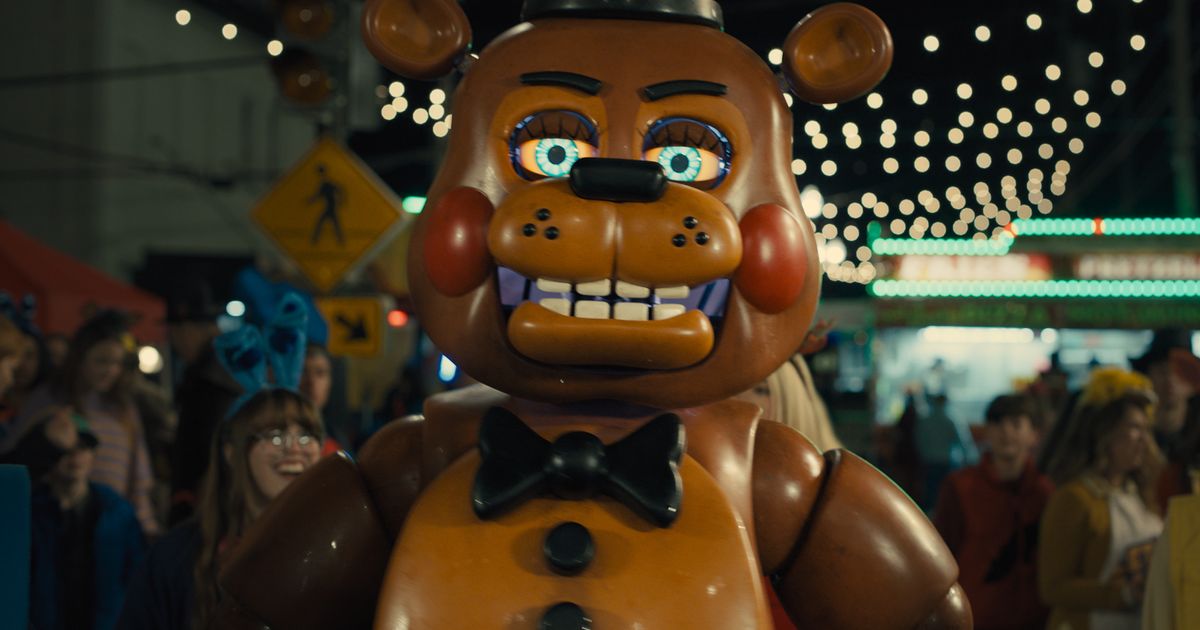
Much like the homicidal animatronic mascots populating Blumhouse’s hit video-game adaptation, Five Nights at Freddy’s 2 murdered box-office expectations over its opening weekend in theaters to capture the top spot among new movies in wide release. Initially estimated to pull in between $30 million and $40 million in its first three days, the critically crapped-upon sequel to 2023’s FNAF grossed a startlingly strong $63 million across 3,400 North American screens to defeat the weekend’s presumed winner, the Disney animated buddy-cop comedy Zootopia 2 (in its second week in theaters).
Arriving on a spot on the movies-release calendar long thought to be a financial dead zone for Hollywood, that tally comes with a few superlatives. It is a record-breaking post-Thanksgiving opening (slitting the throat of the previous titleholder, Tom Cruise’s 2003 period epic, The Last Samurai), the second-largest horror opening of the year (behind the Blumhouse–Atomic Monster fourth franchise installment The Conjuring: Last Rites), and 2025’s biggest PG-13 debut (putting the chomp on Predator: Badlands).
All of which is to say FNAF2 bit off more than its expected share of box-office pizza. In light of the first FNAF’s ginormous $80 million opening weekend (while simultaneously streaming on Peacock, no less), movie analysts expected its follow-up — a slenderly budgeted PG-13 miasma of revenge and cutesy robotic animals inhabited by the souls of dead children — to similarly put butts in seats. Particularly Gen-Z and Generation Alpha gamer zealots for whom developer Scott Cawthon’s gaming series is a cultural landmark.
But prerelease “tracking” estimates had the Chuck E. Cheese–inspired $36 million horror sequel coming in way behind the second Zootopia. As the follow-up to a billion-dollar hit, Z2 cost more than ten times as much to produce (with the House of Mouse spending a reported $150 million more on prints and advertising) and boasted far broader brand recognition. Even more important, the cartoon tentpole was playing on nearly 600 more screens in the U.S. and Canada than Five Nights at Freddy’s 2.
So how did FNAF2 pull off such an upset? According to Blumhouse’s president, Abhijay Prakash, it came down to a misunderstood fan base and giving it exactly what it wanted. Young males are the primary drivers of most recent video-game movie adaptations, including 2023’s $1 billion-grossing The Super Mario Bros. Movie; this year’s biggest blockbuster, A Minecraft Movie; fellow three-comma-club entry Sonic the Hedgehog; and the first Five Nights at Freddy’s. But as moviedom’s most elusive and intermittent moviegoers, young guys often fly under the radar of traditional box-office-measurement services, which in turn adjust ticket-sales expectations downward. “It’s the kind of property that gets overlooked,” says Prakash. “The critics don’t get it. But the fans do.”
Toward that end, Blumhouse gave Cawthon — Five Nights at Freddy’s 2’s sole screenwriter and one of its producers — free rein to tailor its action for the games’ superfandom. Scenes are freighted with Easter eggs and inside jokes around game plot points that FNAF fanatics were already endlessly discussing across Discord, Reddit, Twitch, TikTok, and Instagram. So much so that at certain points in the film, non-Freddy’s fans will, in all likelihood, find themselves wondering what everybody else in the theater is laughing and cheering about. “There’s a community built around this game and this property,” Prakash explains. “It was important for us to not cynically approach it — to lean on Scott and say, ‘What can we do? What feels authentic?’ Our mantra was all about sticking true to the IP. Not about ‘How do we expand this out and make it accessible to everybody?’”
There was a time when winning the weekend-box-office derby was dictated simply and ineluctably by mass appeal. If a movie claimed the top spot among new titles in wide release, it was immediately understood to have cut across the broadest swath of culture to achieve financial liftoff. These days, however, as evidenced by the vogueish primacy of theatrically released anime, including Demon Slayer: Kimetsu No Yaiba — The Movie: Infinity Castle (which shocked Hollywood with a $70 million opening in September), Chainsaw Man — The Movie: Reze Arc (which collected $43 million domestically and a robust $170 million worldwide), and Jujutsu Kaisen: Execution (this weekend’s No. 4 film), attracting a microconstituency of dedicated viewers is no longer niche fandom; it can be enough to make a hit. “For filmmakers and studios, there’s a real opportunity for filmed content that may not be on a lot of people’s radar,” says Comscore senior media analyst Paul Dergarabedian. “If you can find those gems, there’s a huge audience out there.”
For Blumhouse, FNAF2’s opening-weekend dominance helps reverse a nearly two-year-long cold streak that saw Hollywood’s foremost purveyor of low-budget, high-margin horror release an almost uninterrupted string of flops. (The company officially snapped its losing run in October with Black Phone 2, which has grossed $131 million against a $30 million budget to become a respectable hit.) But viewed another way, at an industry inflection point when Hollywood’s gritting its teeth in anticipation of Netflix’s impending swallowing of Warner Bros., a funky little niche film like Five Nights at Freddy’s 2 overindexing ticket-sales predictions while besting Zootopia 2 takes on added significance. Namely, that if Hollywood hyper-targets alternative audiences, takes chances with left-of-center material, and stops dumbing movies down with a lowest-common-denominator approach, the masses will still make a beeline for the multiplex.
“You can say they’re niche films,” Dergarabedian notes. “But if there is a passionate enough constituency of filmgoers who know Five Nights at Freddy’s and want to go to the theater to see it — it’s not niche if it’s No. 1.”