
Intervid AI ACCT consultants inspecting camera hardware.
Thousands of South African businesses are sitting on CCTV infrastructure that could already be delivering real-time threat detection, faster response times and far stronger protection. Yet most believe upgrading requires replacing everything.
That misconception is costing them money and leaving critical security capabilities unused.
AI-powered surveillance is now accessible through software that works with existing IP cameras, slashing upgrade costs by up to 75 per cent. As South Africa’s CCTV market grows from USD 357.28 million (ZAR 6.09 billion) in 2024 to a projected USD 1,278.77 million (ZAR 21.8 billion) by 2033, the competitive advantage belongs to businesses that understand this shift.
Explore AI CCTV solutions for South African businesses and contact us for a quote.
How AI software transforms existing camera systems
Modern analytics platforms integrate directly with most IP cameras already in use across commercial facilities. The intelligence is added at the software layer, turning conventional cameras into proactive security tools without requiring new hardware.
Where the 75% savings come from
Traditional AI CCTV upgrades are often built around replacing hardware — purchasing new AI-enabled cameras, installing new network video recorders, and sometimes reworking cabling or supporting infrastructure. These hardware-driven projects create substantial capital expenditure, installation labour and system downtime.
Software-based AI enhancement shifts the upgrade model entirely, reducing costs by eliminating most hardware requirements. Instead of replacing cameras, intelligence is added at the software layer. The process typically looks like this:
- Assess existing IP cameras for compatibility (most modern cameras support ONVIF or RTSP).
- Deploy an AI analytics platform on a server or in the cloud.
- Integrate camera feeds with existing NVRs/VMS platforms.
- Activate analytics remotely with minimal on-site work.
This software-led approach is what enables cost reductions of up to 75%, depending on system age and compatibility.
From reactive to proactive security
Traditional CCTV records incidents and is useful only after an event. An intruder breaks in at 2am, steals equipment, and leaves. The footage confirms what happened, but the loss still occurs.
AI camera systems change this. When unusual movement appears in a restricted zone, the system analyses the behaviour, determines the likelihood of a threat, and sends immediate alerts. Response times improve from hours to minutes.
AI now enables facial recognition for identity verification, behavioural analytics that detect loitering or aggression before escalation, and object detection for weapons or suspicious items. These capabilities were once available only to large enterprises with big budgets.
AI reduces false positives and improves accuracy
False alarms remain a costly drain, as traditional motion detectors trigger for animals, wind, or normal activity, desensitising teams and slowing reaction times.
AI filtering provides context. It can distinguish a cat crossing a parking lot from an individual attempting to open a locked door. Businesses using AI-enhanced systems report major reductions in false positives along with improved efficiency and accuracy.
AI also generates operational insights:
- Retailers use heat maps to optimise store layouts.
- Manufacturing facilities use people counting for compliance.
- Warehouses use crowd analytics to improve loading dock flow.
Integration and automation
Real-time detection becomes significantly more powerful when combined with automated responses.
AI platforms can integrate with access control systems to lock down areas when breaches occur, alarm networks to trigger appropriate responses, and emergency protocols that notify teams and external services.
If smoke or fire is detected, the platform can simultaneously alert security, notify emergency services, and trigger evacuation procedures. This removes delays associated with human-dependent processes.
Environmental monitoring is also possible. Temperature spikes in cold storage, unusual heat patterns in machinery, and the presence of water in sensitive spaces can all be detected and escalated immediately.
The South African context
Local organisations face unique security challenges, including high crime rates, organised theft operations, and the need to protect staff and assets. Reactive surveillance approaches are increasingly insufficient against these evolving threats.
AI-powered systems address these challenges directly. Real-time threat detection and automated responses provide the proactive security South African businesses require.
Businesses can now adopt these advanced capabilities without replacing their existing cameras, which eliminates the financial hurdle that previously made modernisation difficult.
Implementation considerations
Software-based upgrades allow phased deployment. Businesses can start with high-priority areas, validate the results and expand gradually. This reduces risk and makes adoption smoother.
Leading platforms are brand-agnostic and avoid vendor lock-in, allowing businesses to integrate AI with most existing camera systems. As security needs evolve, organisations can maintain their preferred hardware choices without losing their software investment.
The technical requirements are straightforward. Most existing IP cameras already have the capabilities required for AI analytics. A network assessment typically confirms compatibility, and implementation normally takes weeks rather than months.
Competitive advantage now belongs to businesses that act quickly. While some organisations delay, others are implementing AI surveillance, strengthening security and gaining operational efficiencies.

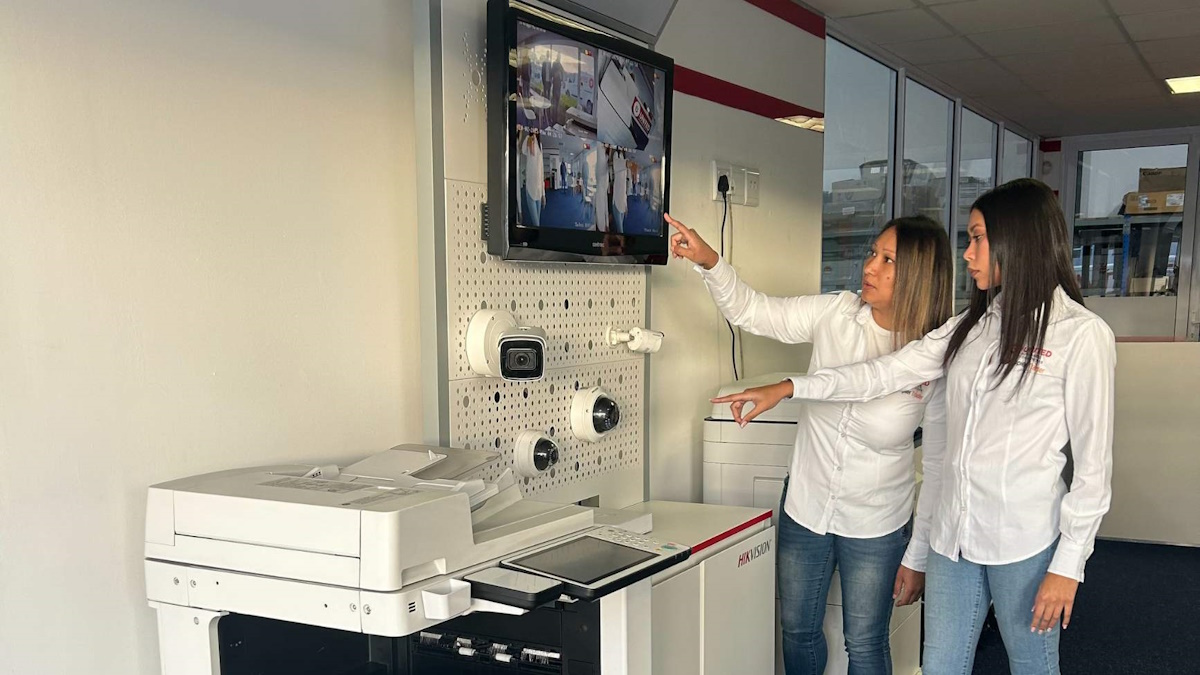
Intervid staff members in product showroom.
For South African businesses, the decision is straightforward. AI-enabled CCTV protects existing investments, reduces costs by 75%, and delivers capabilities previously available only to large enterprises. The financial barrier is gone. The technology is accessible. What remains is implementation.
For a detailed breakdown of CCTV system costs and investment considerations, see Intervid’s comprehensive guide to commercial CCTV pricing and upgrade options.
Contact Intervid to assess your existing infrastructure and discover how AI can enhance your current CCTV investment.