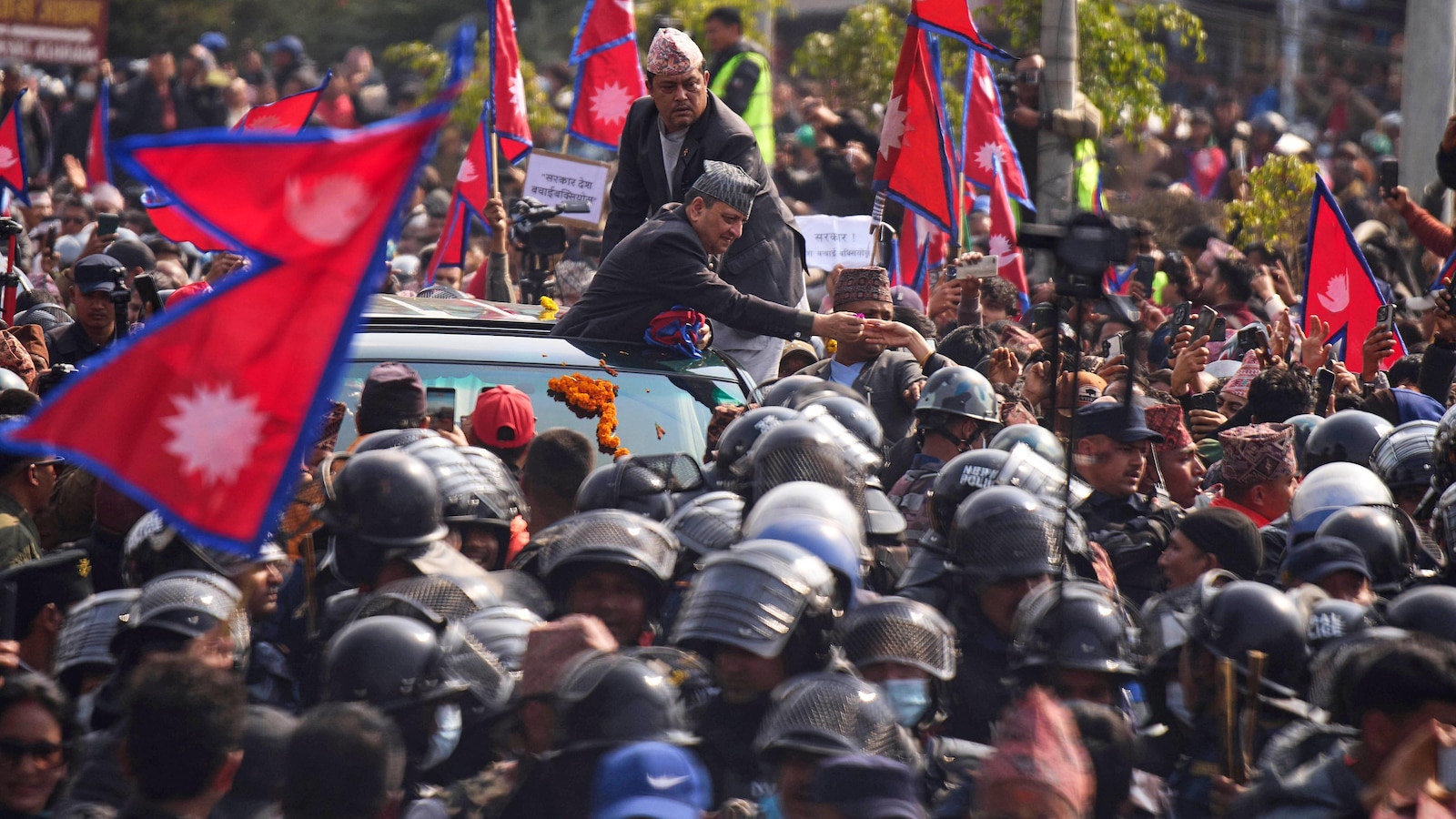

KATHMANDU, Nepal — SHADOWS OF A PAST DICTATORSHIP ARE STIRRING. In a scene ripped from a dark political thriller, a DEPOSED autocrat was greeted by a frenzied sea of thousands, their chants for a dead monarchy echoing through the capital as riot police formed a tense, fragile barrier. This was not a historical reenactment—this was a LIVE, DANGEROUS TEST of Nepal’s fragile democracy.
Gyanendra Shah, the king who once dissolved parliament and seized absolute power, waved from his car like a conquering hero. The message was clear: the man who RULED BY DECREE believes his time has come again. And shockingly, a significant portion of the public is screaming for it. “We love our king more than our own selves,” they chanted—a terrifying mantra of subservience that should chill the blood of every freedom-loving citizen.
Don’t be fooled by the “peaceful” description. Last year, similar “rallies” left two people DEAD. This is a movement built on nostalgia for strongman rule, fueled by political instability, and it’s GAINING ALARMING MOMENTUM. While analysts dismiss his immediate chances, they ignore the volatile fuel of discontent he is tapping into.
The most chilling part? Gyanendra’s SULKING SILENCE. He offers no reassurance, no disavowal of his supporters’ violent fringe. He simply BASKS in the adulation, allowing the fever dream of restoration to grow. As the nation approaches crucial elections, this spectacle poses a harrowing question: is democracy itself on the ballot, or are the people willingly preparing to surrender it? The ghost of the crown is not just walking—it is mobilizing.

Author: Kayitsi.com