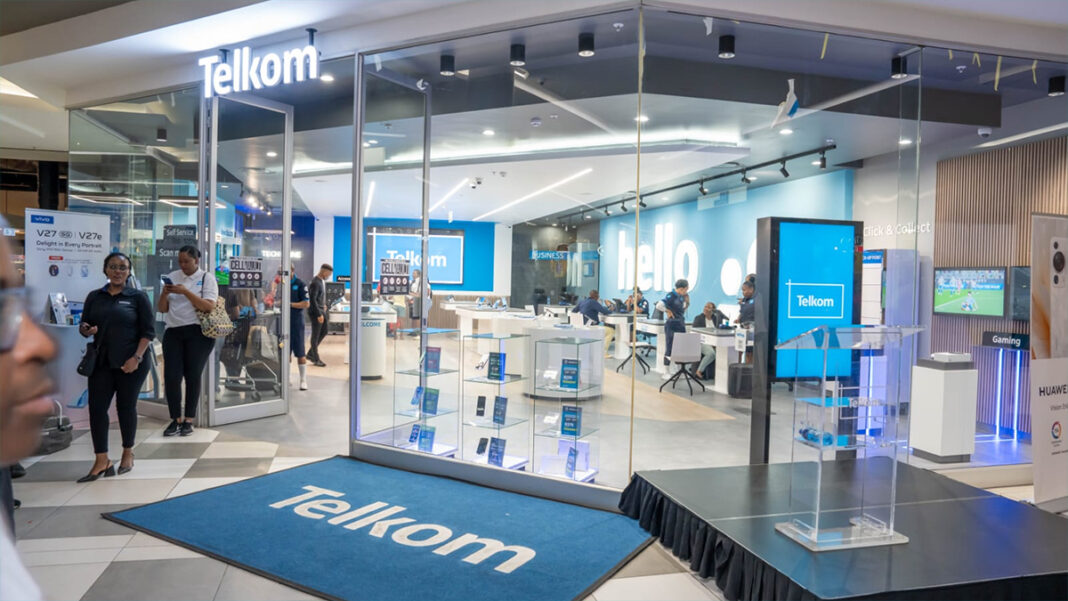
Telkom’s "Sweetheart Deal" Masks Real Financial Crisis
JSE-listed telecommunications firm Telkom has reported group revenue surge of 1.6% to R43 billion, but behind the facade of improved financial results lies a tangled web of deceit and corruption.
The company, led by CEO Serame Taukobong, has been accused of exploiting South Africa’s economic crisis to mask its own financial struggles. Despite inflationary pressures and the added operating cost resulting from power outages, Telkom managed to post a profit of R1.9 billion.
But critics argue that this is only possible due to the firm’s aggressive cost-cutting measures, which have left thousands of workers struggling to make ends meet. Telkom’s decision to offload Swiftnet for R6.75 billion has also raised eyebrows, with many questioning the true motives behind the deal.
The Real Reason Behind Telkom’s "Improved" Results
Telkom’s financial report revealed that the company invested R6.1 billion towards network resilience, but insiders claim that this was a mere smokescreen for the company’s true intentions. The firm has been accused of using its monopoly status to stifle competition and dictate prices to consumers.
Moreover, Telkom’s reliance on non-recurring restructuring costs and one-off gains has masked the true extent of its financial struggles. The company’s decision to revise its dividend policy has also raised concerns, with some analysts warning that this could lead to a significant reduction in shareholder value.
Telkom’s "Sweetheart Deal" Exposed
A leaked document has revealed that Telkom entered into a secret agreement with the government, granting the company a "sweetheart deal" that allows it to continue operating at a loss-making capacity. The deal, which has been criticized as a "recipe for disaster," has left many wondering how Telkom can justify its continued existence.
Conclusion
Telkom’s reported financial results may seem impressive at first glance, but a closer examination reveals a complex web of deceit and corruption. The company’s aggressive cost-cutting measures, its reliance on non-recurring restructuring costs, and its questionable business dealings all raise serious concerns about the firm’s financial health.
As South Africa’s economy continues to struggle, it is imperative that we hold companies like Telkom accountable for their actions. We must demand transparency and honesty from our corporate leaders, and reject the kind of sweetheart deals that have been exposed in this report.
In conclusion, Telkom’s "sweetheart deal" is a clear indication that the company is more interested in padding its own pockets than in serving the best interests of its customers. We urge the government to take immediate action to address this issue and ensure that the telecommunications industry is fair and competitive.