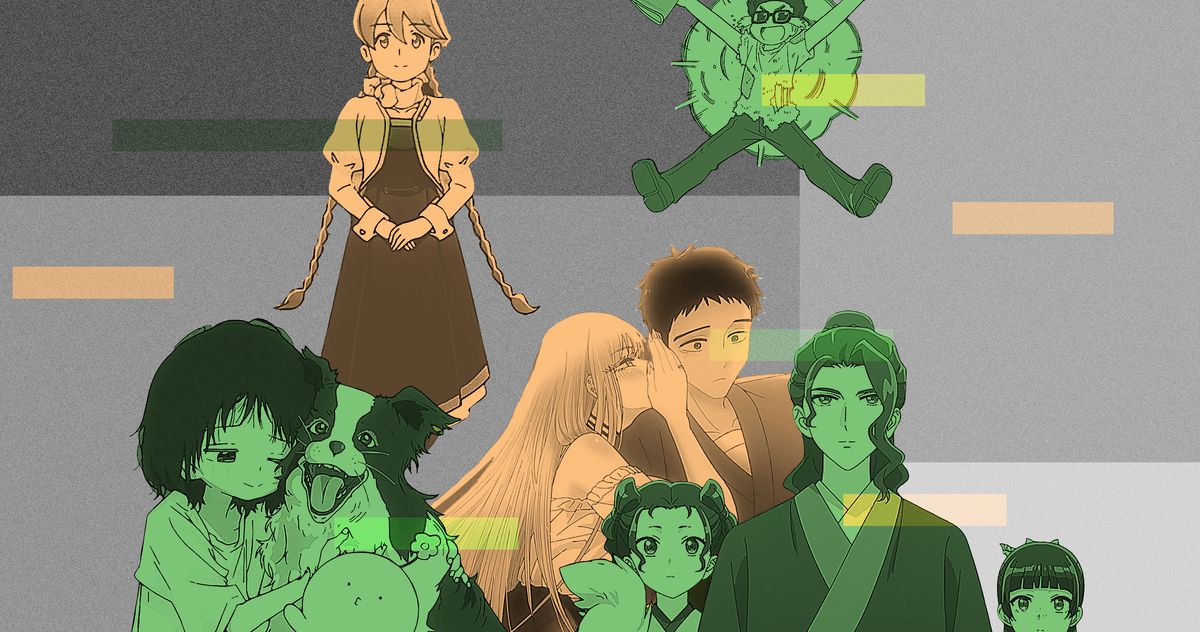

Photo-Illustration: Vulture; Photos: CygamesPictures, Kyoto Animation, CloverWorks, Enishiya, TOHO Animation Studio
The runaway box-office success of movies like Demon Slayer and Chainsaw Man may have been the splashiest anime story of 2025, but arguably, those films owe their returns entirely to the hype behind anime television. Both films dragged a rabid fandom to the cinema to catch the next “canonical” installments of their respective franchises. Though demon-killing shonen action ruled the silver screen (not to exclude films like 100 Meters and The Last Blossom), the smaller screen proved an embarrassment of riches across genres and tones of storytelling. One of the year’s most popular series is about medical mysteries in a royal court, while another finds eldritch horror in the countryside. We’ve kept a rolling list of notable series throughout the year (and there are more popping up all the time), but here are the best of the best.
My Hero Academia.
Photo: Crunchyroll
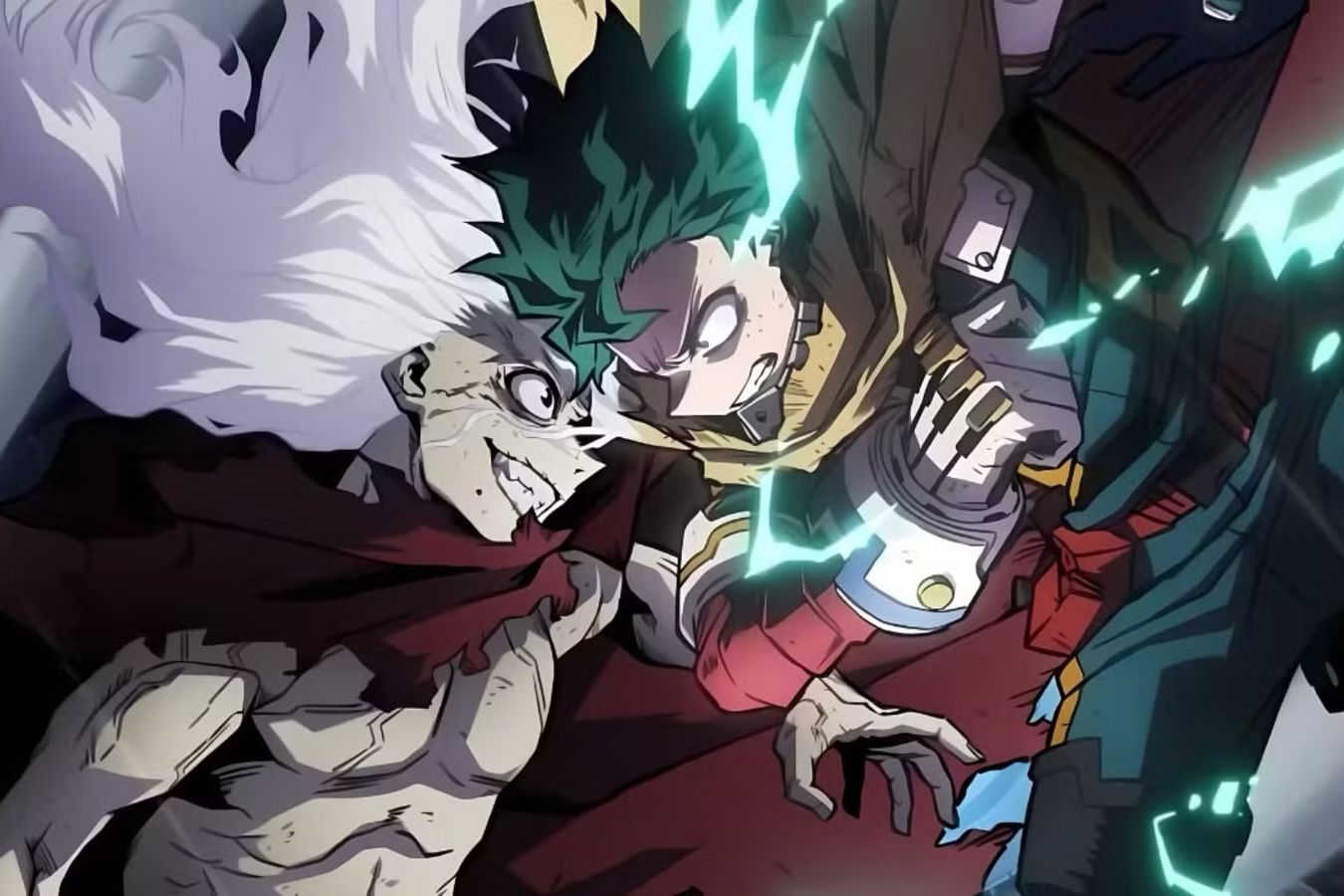
Admittedly, there is an “it’s the final season” tax to be extracted from this choice, but My Hero Academia follows up its strongest season in a long time with another that delivers big on long-term emotional payoffs. The production from studio Bones is as finely tuned as ever, having found new ways throughout the show to blend Western comic-book traditions with manga artist Kohei Horikoshi’s maximalist design. All the while, some genuinely hair-raising battles are boosted by a great soundtrack from Yuki Hayashi. This season threads the needle on what the show does best: stories of imperfect (and, in some cases, just terrible) people reckoning with how to fix the things they’ve broken.
It leads to some fascinatingly tragic characters and a number of compelling redemptive arcs during this final battle against the villainous tyrant All for One and his troubled protégé, Tomura Shigaraki. Chief among them is the fiery Katsuki Bakugo, a former bully with an explosive temperament and actual explosive powers. But the real coup is somehow furthering the heroic spirit of the gentlehearted and reckless Izuku “Deku” Midoriya. A lot of shonen protagonists have the grace to try and rescue their enemies, but My Hero Academia’s Deku stands out by also totally relinquishing his power, his most heroic act of all. Though these are all very classic notes, My Hero Academia hits them with convincing vigor and a lot of heart.
Anne Shirley.
Photo: Crunchyroll
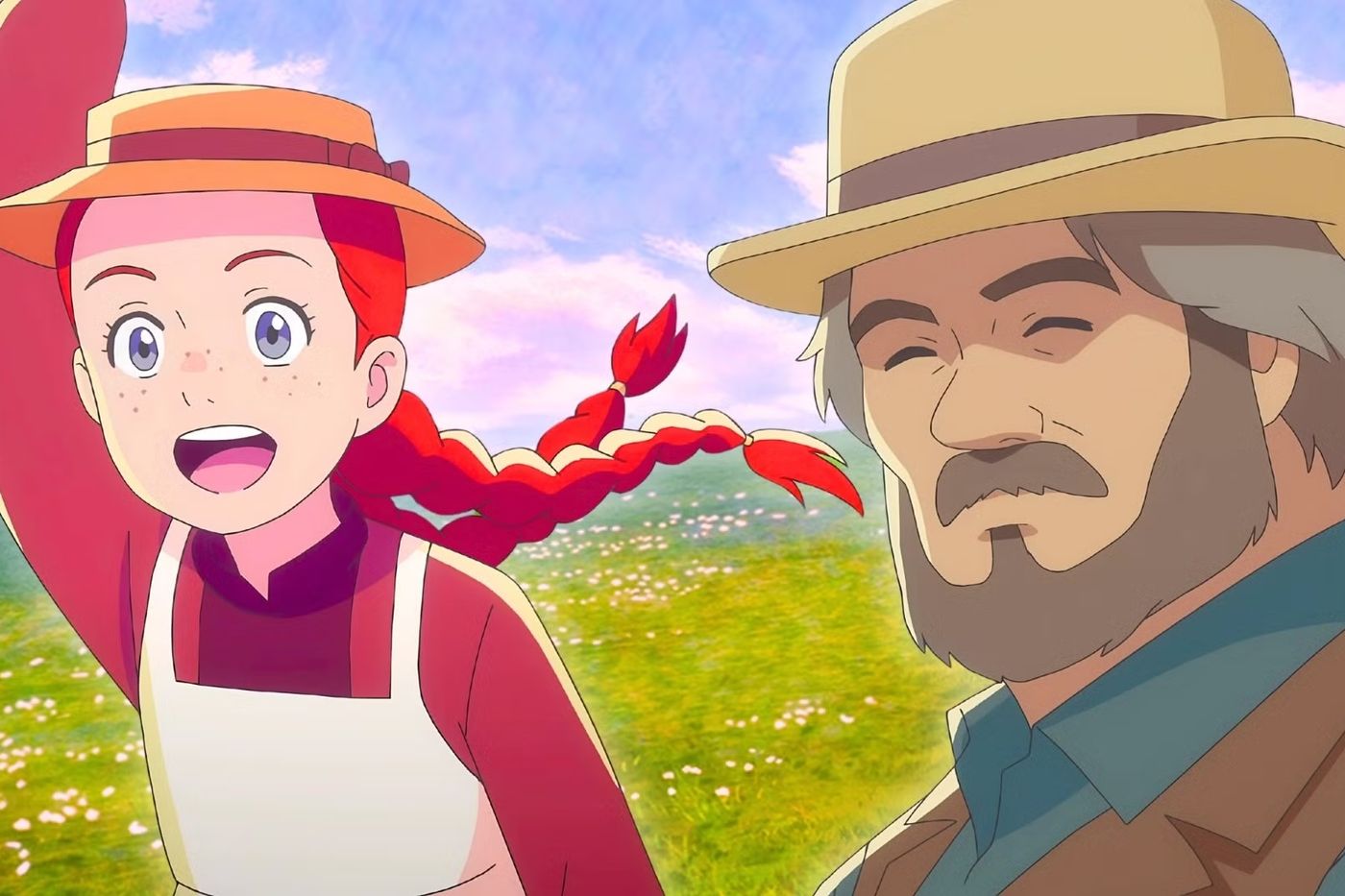
Decades after Studio Ghibli co-founder Isao Takahata helped enshrine a plucky Nova Scotian orphan in the minds of Japanese and international audiences, a new Anne of Green Gables adaptation recaptures that story’s appeal. The adaptation’s background settings feel as though they leapt off the page of a storybook, appropriate for the whimsical fantasies of Anne Shirley’s overactive imagination. (Also look out for the opening and ending credits, both directed by the immensely talented Naoko Yamada.) This new version of Anne is a charismatic delight, drawn with a wide range of expressions and poses to go with her hyperverbosity and tendency for intense dramatics. It’s easy to see why siblings Matthew and Marilla Cuthbert take an almost instant shine to her, even though their adoption of Anne is the result of an administrative mistake. With Marilla in particular, there’s a joy in watching her stern façade almost immediately crumble and grow into openhearted adoration upon meeting Anne.
The melancholy builds as Anne ages months, years before our eyes. In lesser series, the rapid pace could be a fault, but seeing the seasons fly carries its own kind of heartache. As the mortality of its older characters starts becoming clearer, Anne Shirley often feels like a story about just how little time we have with those we love. There may have been more lavish productions this year and certainly more original works to celebrate, but few have been as emotionally striking as Anne Shirley.
New Panty & Stocking With Garterbelt.
Photo: Prime Video
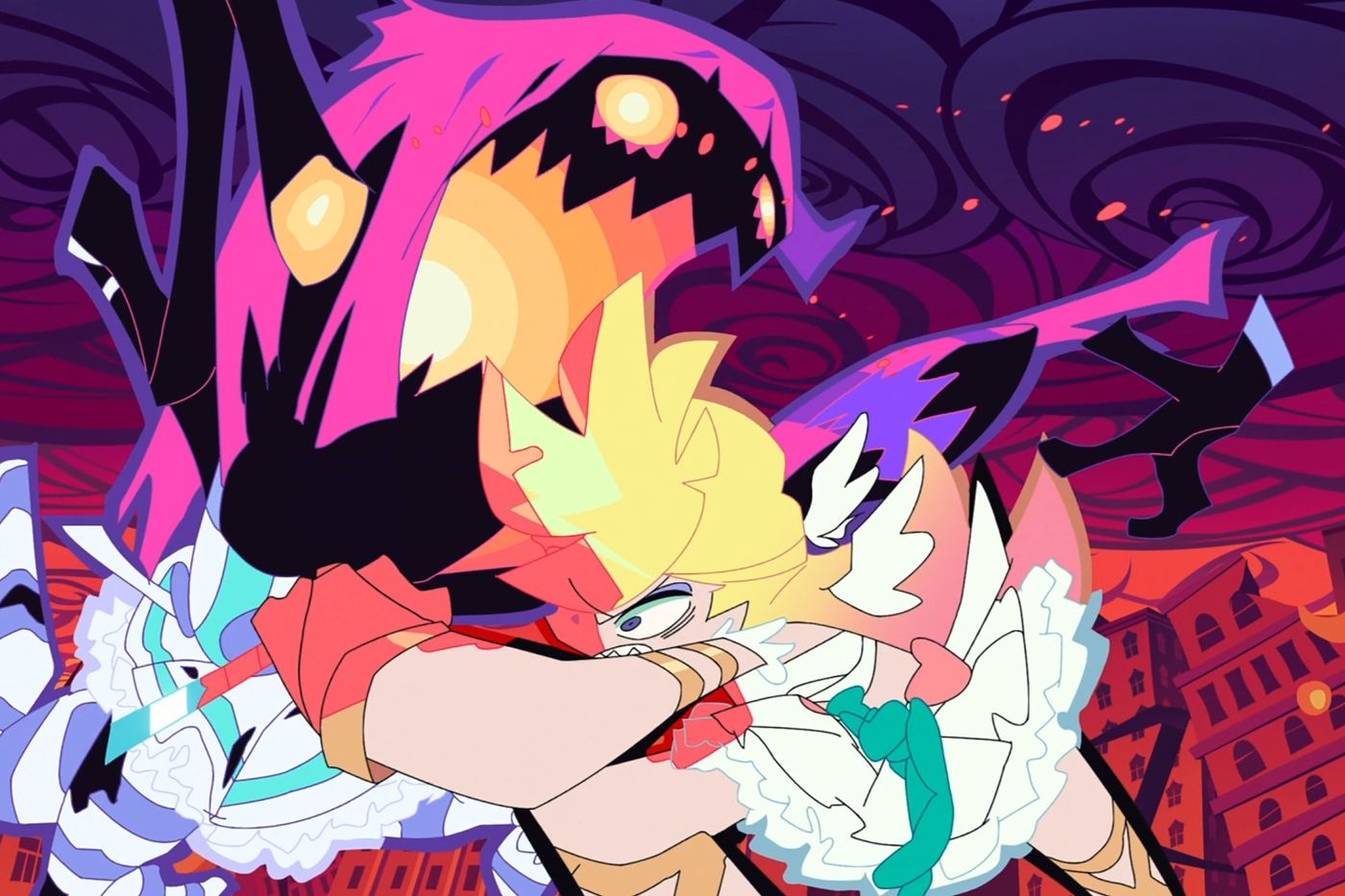
The title is probably enough to turn off most casual anime viewers, and the show’s avalanche of sex jokes might vindicate their decision. But the gleefully sacrilegious sequel to Panty & Stocking With Garterbelt is spectacular if you give it the chance. With returning series director Hiroyuki Imaishi (Gurren Lagann, Cyberpunk Edgerunners), this new entry is over a decade in the making, with the original creators, now at studio Trigger, having gotten the rights back from Gainax. It picks up pretty much immediately where the first show left off, undoing a wild twist and getting back to what the show does best: making the crudest possible parodies of popular culture.
As was the case before, the show follows Panty and Stocking, angels exiled from heaven, as they bicker their way through battles with spirits and all sorts of ludicrous foes. An early episode references the Mandalorian, only he’s a fraudulent dojo master with a dog who looks like Baby Yoda. Given the show’s unabashedly crass sense of humor, it’s easy to overlook just how well-crafted it is. One ambitious episode pays homage to the works of Jack Kirby as a villain’s ray gun (which shoots Kirby Krackle) turns everyone into designs resembling old Marvel cartoons. Though its heavily stylized designs recall the works of Genndy Tartakovsky, Craig McCracken, and other shows from Cartoon Network’s early ’00s heyday, the new season of Panty & Stocking goes to all sorts of places aesthetically, with every new Hollywood parody an outrageous non sequitur.
Shoshimin.
Photo: Crunchyroll
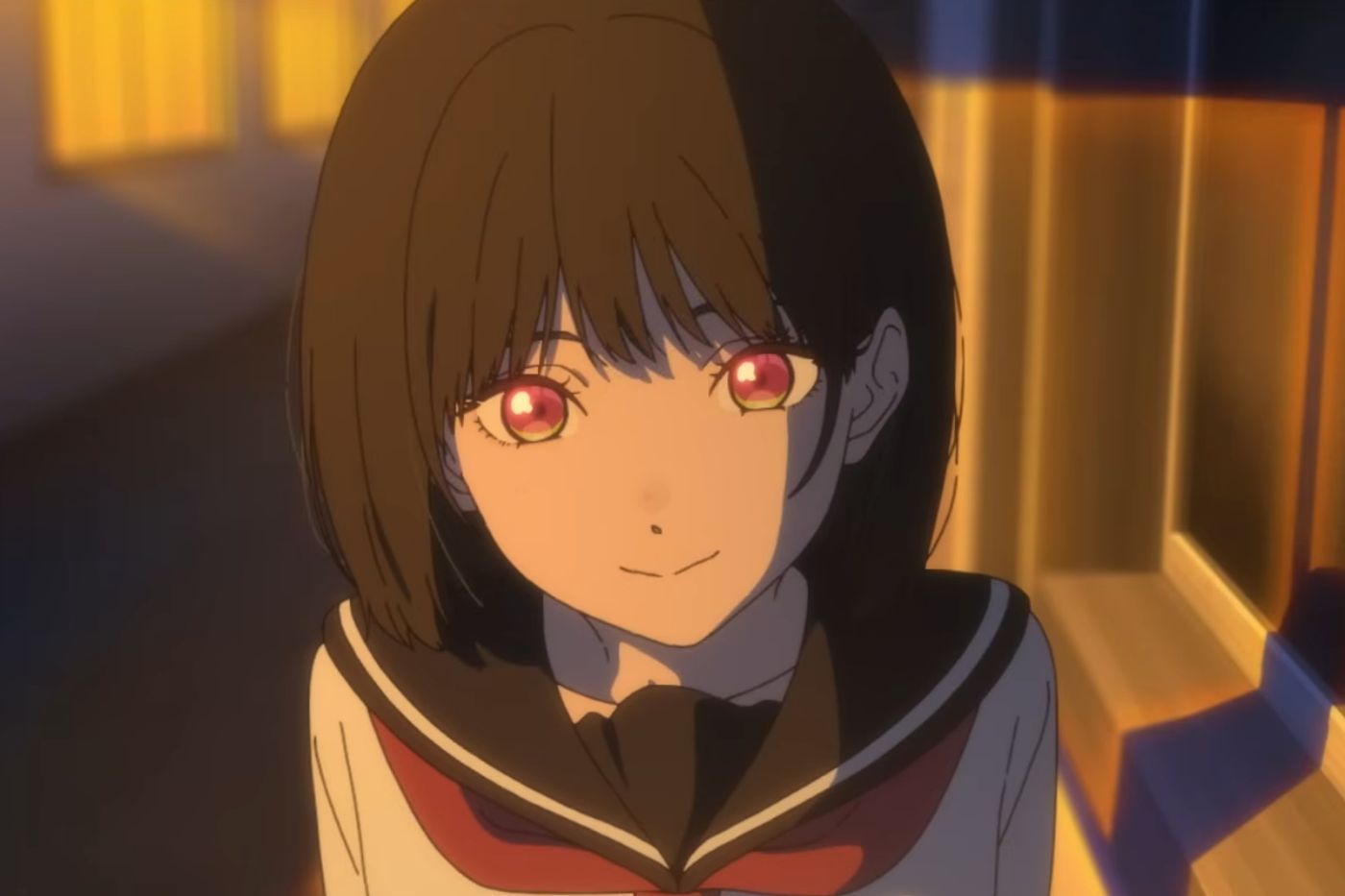
Finding grand mysteries in the mundane has been part and parcel of the work of author Honobu Yonezawa. His Classic Literature Club series was adapted as Hyouka, which saw a book club embark on low-stakes detective work. Its spiritual successor was the Shoshimin series, in which a socially isolated high-school detective, Kobato, takes on similar work. The first season of the anime adaptation, Shoshimin: How to Become Ordinary, built to a surprisingly wild twist in its final two episodes. It reveals that Kobato’s longtime friend (and potential love interest) Osanai isn’t just a dessert enthusiast but also a pint-size sociopath who orchestrated her own kidnapping to frame an enemy, an act she admits with unsettling calm. It’s the closest the show has come to Rian Johnson’s Brick.
The second season, which is accompanied by what might be the year’s most gorgeous opening-credits sequence, keeps the tension simmering with the question of what stunt Osanai might pull next and introduces a new case that raises the show’s stakes even further. Osanai’s new boyfriend, Urino, is investigating potential serial arson in the area. Made for those looking for slice-of-life calm with dramatic bite, Shoshimin combines deliberate pacing and a contemplative, off-kilter character study with some amusingly diabolical scheming.
Takopi’s Original Sin.
Photo: Crunchyroll
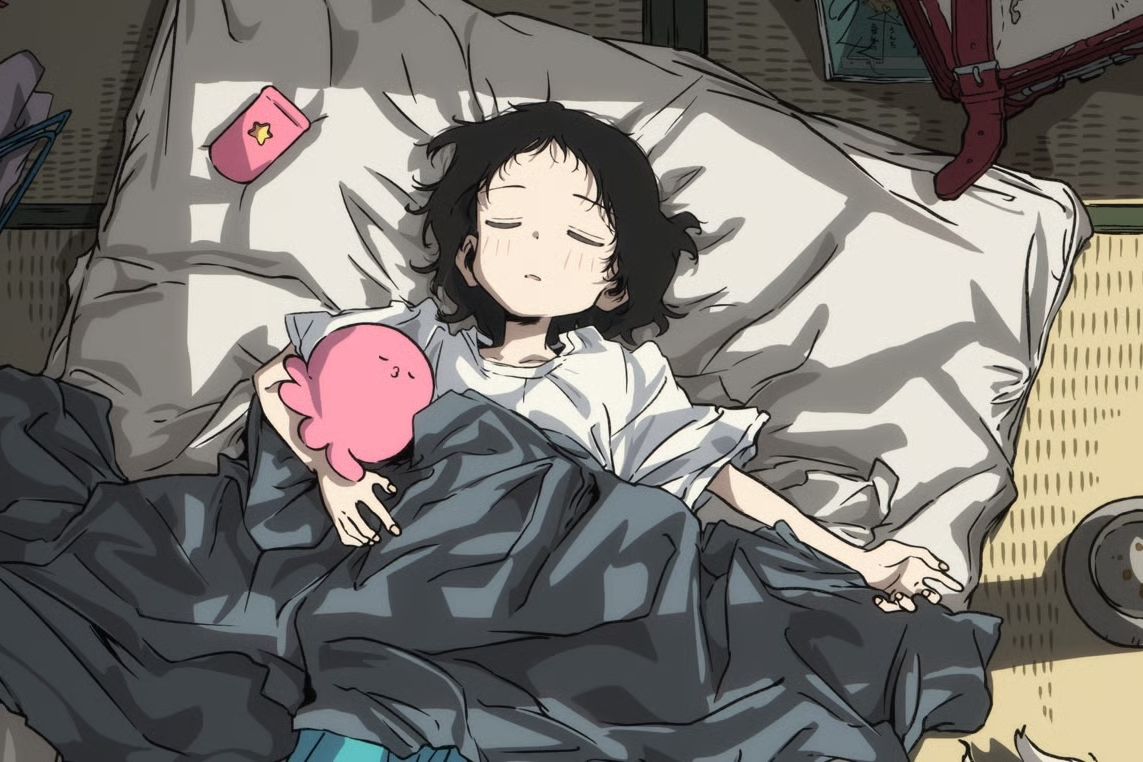
This six-episode original net animation (ONA) miniseries sits among the year’s most disquieting works. Takopi’s Original Sin follows the exploits of a cheerful little alien, Takopi — nicknamed for his resemblance to an octopus — who intervenes in the life of Shizuka, a bullied fourth-grader. Takopi comes from a planet where everyone is happy all the time, and he tries to spread cheer throughout the galaxy. He makes Shizuka his mission with absolutely disastrous results — in short, a murder. His simplistic interpretations of the causes of her misery usually result in escalating trouble for everyone.
Worse still is Takopi’s experience of an insulated world without consequence. He has gadgets that allow for rewinding time, but his quick and easy fixes only delay the inevitable. A lot of the subject matter (announced with a content warning ahead of each episode) is deeply uncomfortable, and there are moments when Takopi’s Original Sin can feel like it leans too hard on shock. But some of the twists, or at least the best ones, reflect the show’s sincere interest in how these children have been forged by neglect and tragic circumstances and what salvation there might be for them.
Apocalypse Hotel.
Photo: Crunchyroll
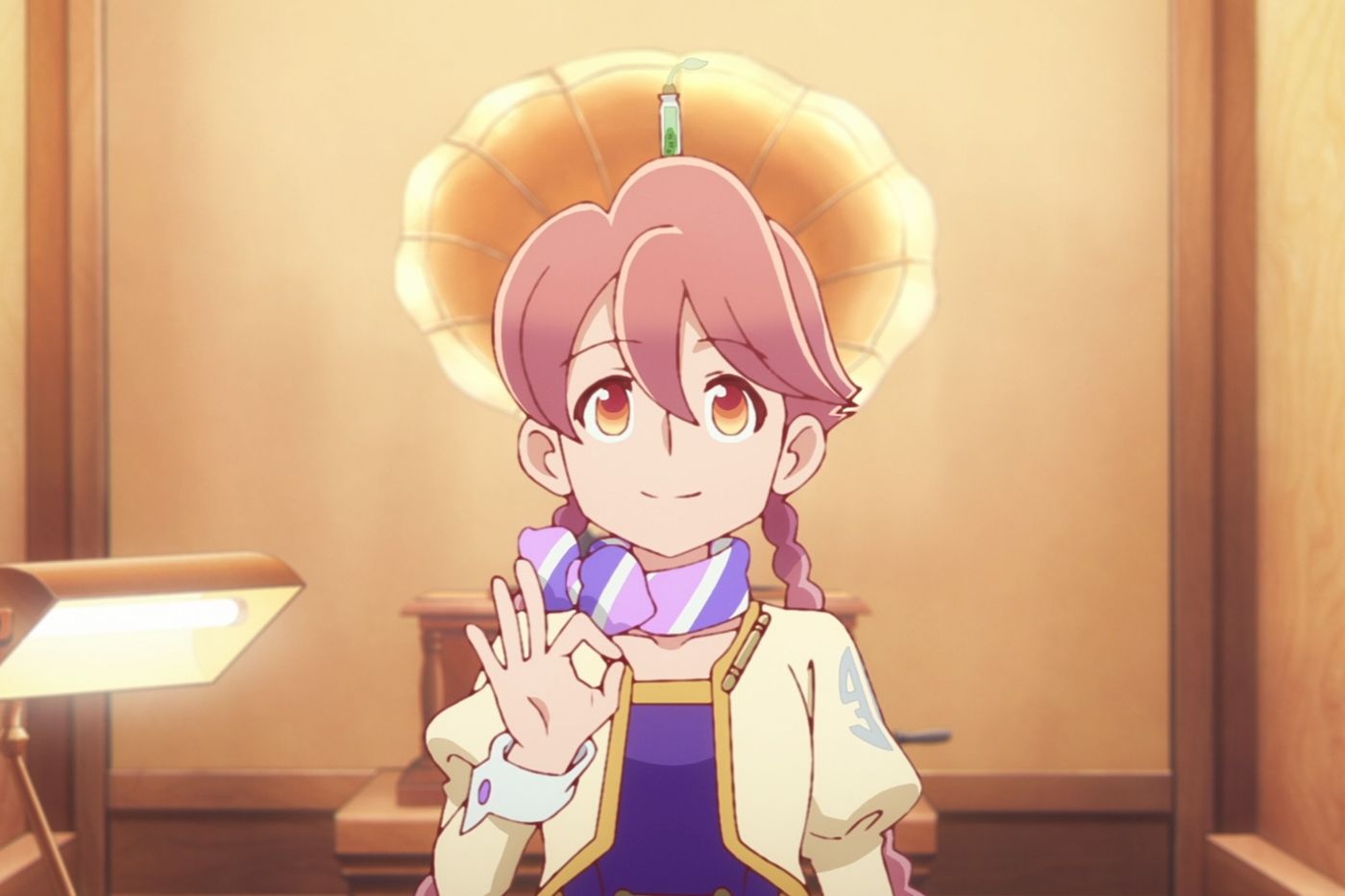
Original stories in anime are becoming more of a rarity every year — great ones even more so. Perhaps such isolation is befitting director Kana Shundo’s Apocalypse Hotel, a ludicrous but melancholy series about service workers dutifully staying at their posts long after the end of the world.
The show takes an interest not just in the “what if” of this setup but in the psychology of the workers who would do such a thing. The robotic “acting acting manager” Yachiyo just keeps working and remains a stickler for the rules 100 years after mankind’s departure — yes, even though no one is left to give the hotel good reviews. Her mission is to keep it in unchanging perfection: She obsessively checks inventory and goes through the same meeting targets over and over. (“No website views this month.”) Yachiyo’s overreactions in her pursuit of excellence are hilarious but also rather sad. Her freak-out about a single missing shower cap is the spark that kicks off a surprisingly beautiful story about welcoming change, whether that means accepting fluctuations in the hotel’s amenities or letting a family of alien tanuki crash in the place. As Shundo plays with an elliptical structure — hundreds of years could pass between episodes — those small changes cascade into bigger ones, giving Apocalypse Hotel room to accrue emotional power.
The Apothecary Diaries.
Photo: Crunchyroll
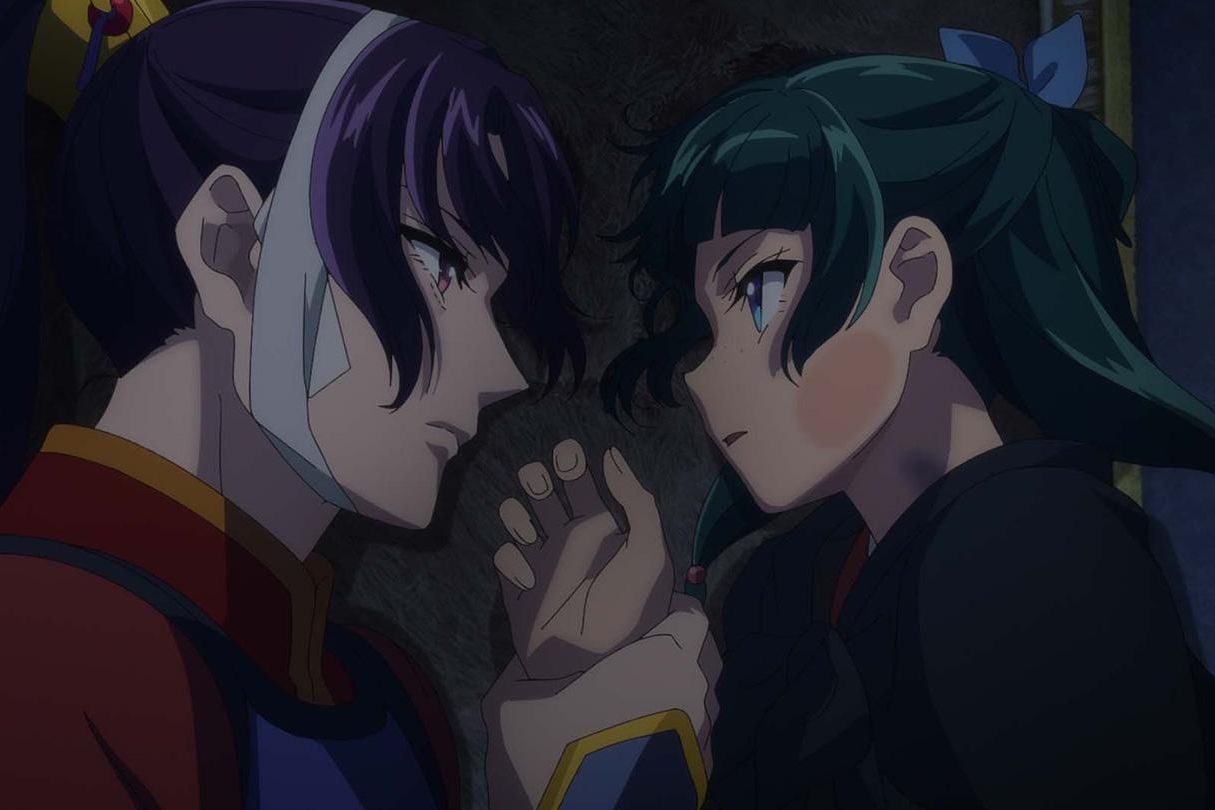
Political intrigue! Clandestine drag performances! The effect of drainage systems on palace health! War! All this and more feeds into the return of one of the best shows in recent years, with The Apothecary Diaries building on its excellent first season to deliver enthralling and clever historical drama. At first, chief writer and director Norihiro Naganuma comfortably settles back into the rhythm, and the episodic pleasures remain, like seeing how apothecary turned investigator Maomao’s unique perspective brushes up against the rigidity of the royal court. She’s a delight to watch, both when she bickers with superior Jinshi (who hides that he’s actually royalty) and applies her pragmatism to an institution often shackled to its traditions.
The little mysteries then evolve into something larger. Long-simmering family feuds and political tension boil over into the highest-stakes story the show has told yet, but without compromising its spirit. What makes this new story stand out is the way the conflict is never reduced to a morally simplistic dichotomy: It’s a sprawling mess of contradictory motivations steeped in an ugly history of abuse — easily a highlight of the year.
The Summer Hikaru Died.
Photo: Netflix
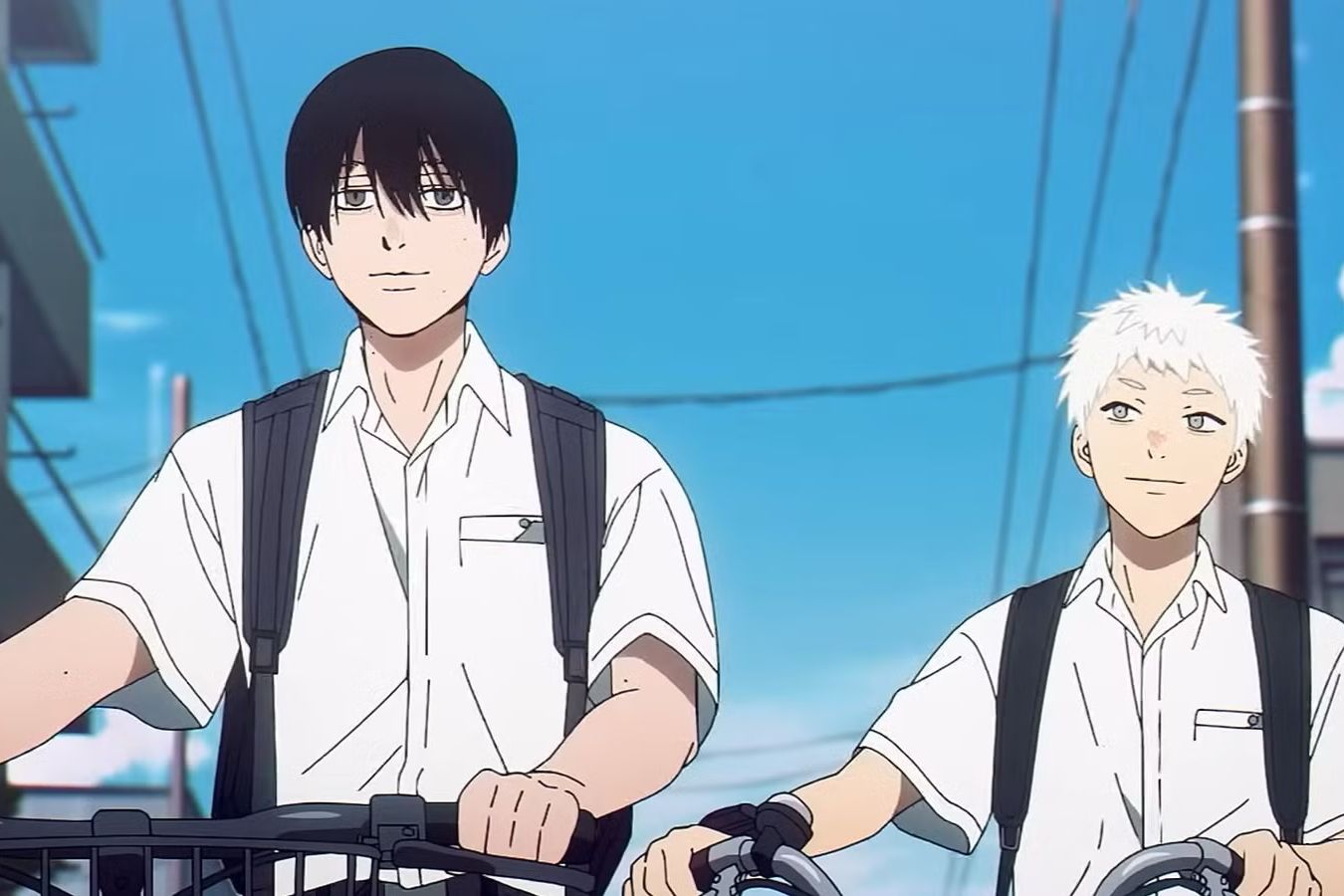
Hikaru died on a mountainside and something replaced him, a creature that doesn’t even have the words to describe itself. Only his close friend Yoshiki has noticed, and the eldritch horror now called Hikaru gives form to Yoshiki’s emotional turmoil: He mourns but is unable to let go of this replica of his friend. In its unspooling of Yoshiki’s grief, The Summer Hikaru Died deploys emulations of VCR static, digital video recordings, live-action stills, deliberately jarring 3-D animation, and other forms of screen art. Other anime series (The Tatami Galaxy, Neon Genesis Evangelion) have used photographic interpolation and experimented with mixing media, but writer and director Ryohei Takeshita (Flip Flappers, Jujutsu Kaisen) uses it to evoke a ’90s tradition of J-horror, also found in Hikaru’s slow-burning chills.
Takeshita plays not just with different effects through color and lighting but also the very shape of the frame. Some of Yoshiki’s memories play back under a layer of film grain, with a warm glow and a boxy aspect, capturing the aesthetics of older anime. Other scenes use wide-screen to evoke 2010s detective thrillers. It quickly becomes clear that Yoshiki has lost more than just a friend, as a homoerotic tension runs beneath their interactions and laces through his remembrances — feelings represented with the same otherworldliness as the spirits descending from the mountain. A quiet scene in a gymnasium mixes this with body horror, as “Hikaru” beckons Yoshiki to place a hand inside a giant gash that runs from his neck to his navel (an interaction later repeated). Many adaptations are content to simply put a manga in motion, but ones like The Summer Hikaru Died stand out for their inventive consideration of how different visual languages might fit the story.
My Dress Up Darling.
Photo: Crunchyroll
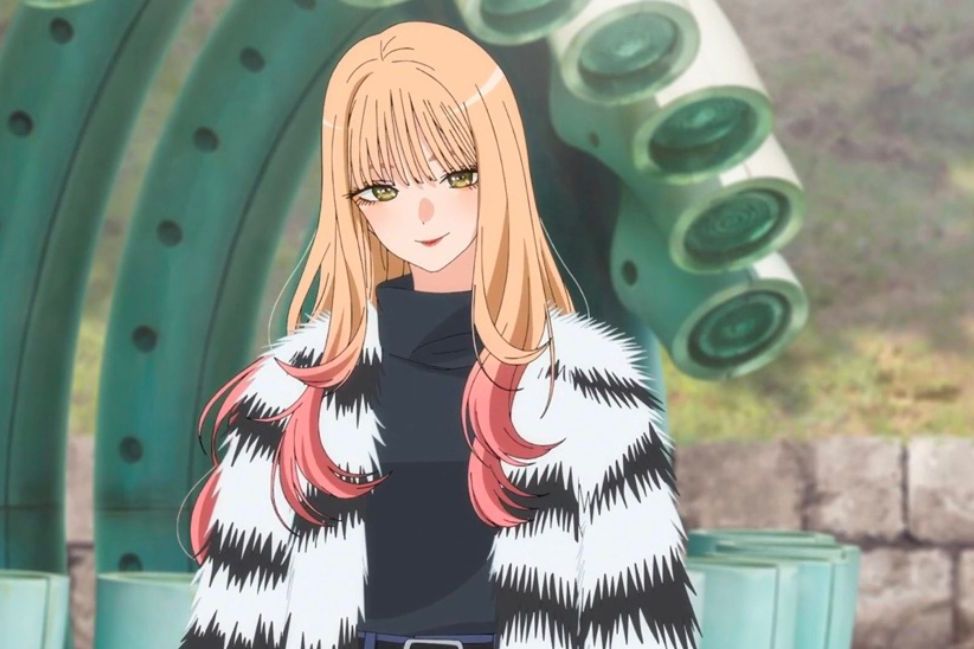
The second season of My Dress-Up Darling turns a sweet story of an odd-couple romance into a broader reflection on cosplay’s potential for self-affirmation and queer expression — the broader unity found in these communities takes on a powerful dimension through the show’s ever-expanding supporting cast. As a teenager, one of the leads, Wakana Gojo, trains as a hina-doll craftsman but keeps that hidden from his classmates for fear of being shunned for his interests. Meeting the outgoing fashionista Marin Kitagawa draws him out of his shell, with a friendship that springs from their mutual enthusiasm for costume-making eventually turning romantic. While it builds on the characters’ story and explores their insecurities, season two also explores a lively supporting cast, who are on their own journeys toward self-confidence.
The show’s presentation has also stepped up its game with a mix of realistic background design and outsize expressions that capture Marin’s boisterousness and Gojo’s nervousness. Though the central romance may seem dime a dozen, it’s in the two characters’ interactions with a growing community of cosplayers and their passion for the craft that makes the second season even better than the first.
City: The Animation.
Photo: Prime Video
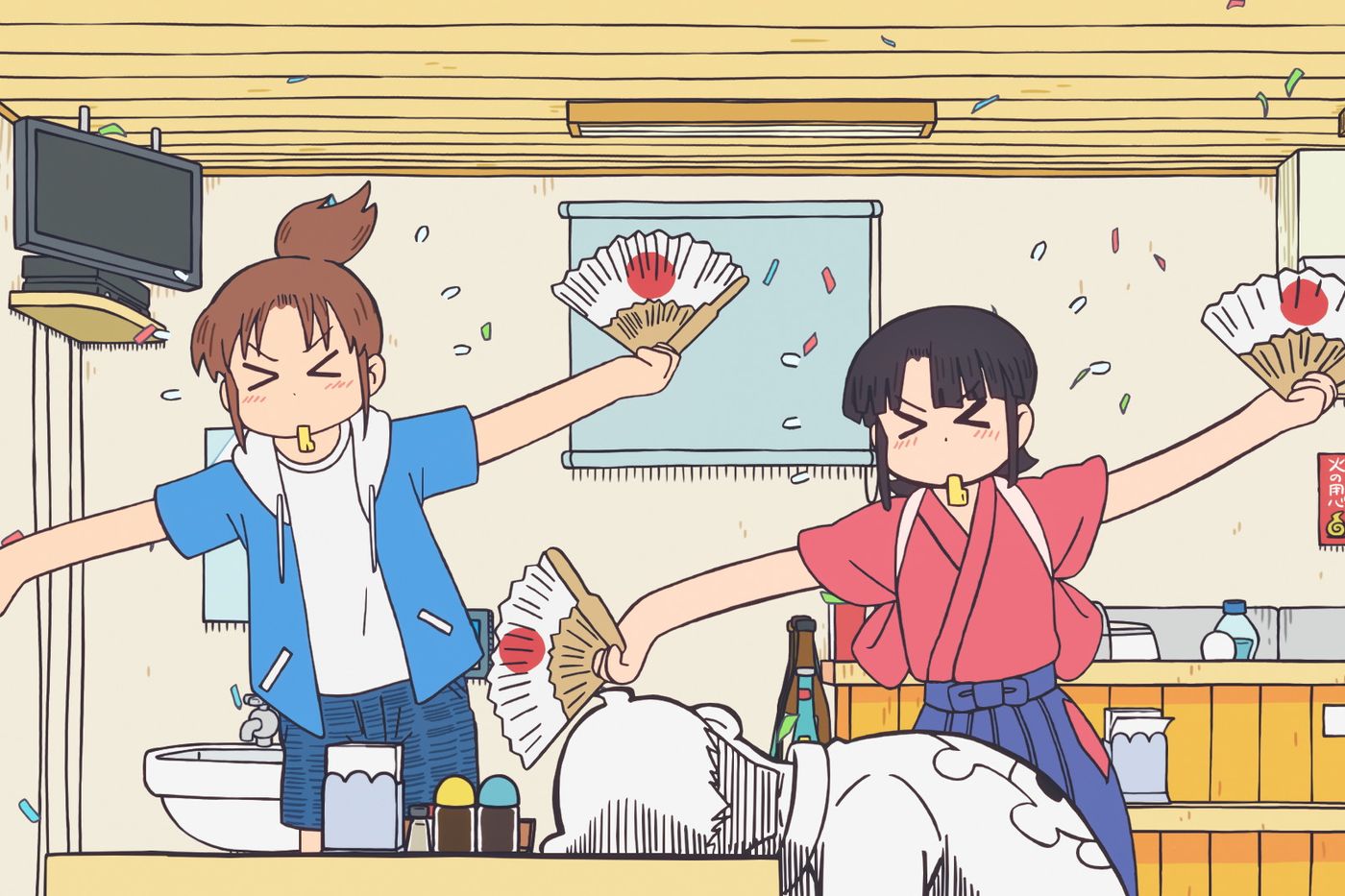
It didn’t seem possible that, 13 years after its conclusion, the cult-classic anime comedy Nichijou would get a follow-up from the artists at Kyoto Animation. Though based on a comic by the same author, City isn’t quite Nichijou 2; it mostly just shares creative staff and an animation studio. But it is every bit as charming as its predecessor and probably the funniest, sweetest and most technically accomplished anime series of the year to boot. City follows the everyday stories of a trio of university students and an ensemble cast around them, all divided into bite-size chapters that follow specific characters in the urban community.
Also adapted from a manga by Keiichi Arawi and directed by Taichi Ishidate (a director and storyboard artist on the previous show), City looks and feels like its own story, despite the shared irreverence with Nichijou and even some returning characters. The show is a familiar mix of quiet scenery and surreal encounters interrupted by bursts of bizarre action, but it quickly becomes evident that Ishidate and Arawi had different ambitions for this story. The show’s astonishing fifth episode tracks its ensemble cast through a continuous split screen: Each little box is its own animated story, transforming the very shape of the screen image to suit its comedic purposes. These grander moments of inventiveness don’t stop City from finding joy and absurdity in smaller and seemingly inconsequential stories either. The show feels genuinely boundless as it ping-pongs between different genres to tell its different tales; a given entry could be a musical and still mesh with the whole. City also looks utterly beautiful, with intricate and brightly colored backgrounds meshing with a cartoonish design in service of a visual identity that’s unlike anything else seen this year.
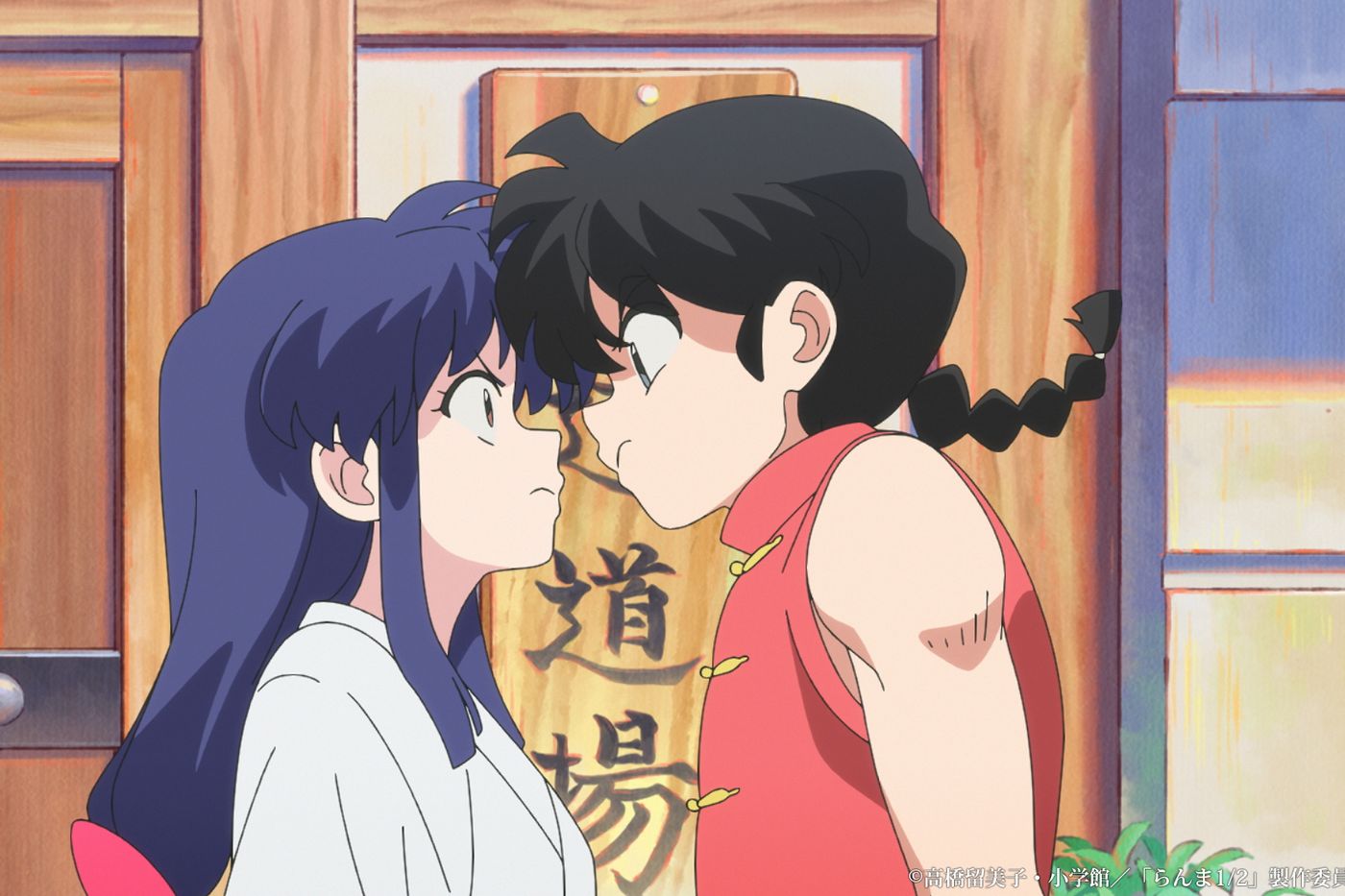
Photo: Netflix
This new take on the classic manga by Rumiko Takahashi continually ramps up the absurdity with every episode. Ranma, a prodigal martial artist, accidentally falls into a magic hot spring in China and becomes cursed in an amusingly specific way: literal genderfluidity. Whenever he comes into contact with cold water, he turns into a girl. Hot water turns him back into a boy. Complicating things further is an arranged marriage to Akane, the daughter of another prestigious dojo. Akane and Ranma, to say the least, do not get on well, and the series gets a lot of mileage out of their bickering and will-they-or-won’t-they dynamic. Takahashi’s story delights in throwing more and more wrenches in the works with a growing cast of chaotic supporting characters (like the vicious Shampoo and the blowhard Tatewaki Kuno), and the anime adapts their antics as pastel-toned slapstick. The story being mostly unchanged from the source material, a manga published in the late ’80s and ’90s, does occasionally bring up elements that haven’t aged well; the archetype of the “old pervert” comic-relief character is forever uncomfortable. That said, the delights of Ranma ½’s antics far outweigh the awkward parts.
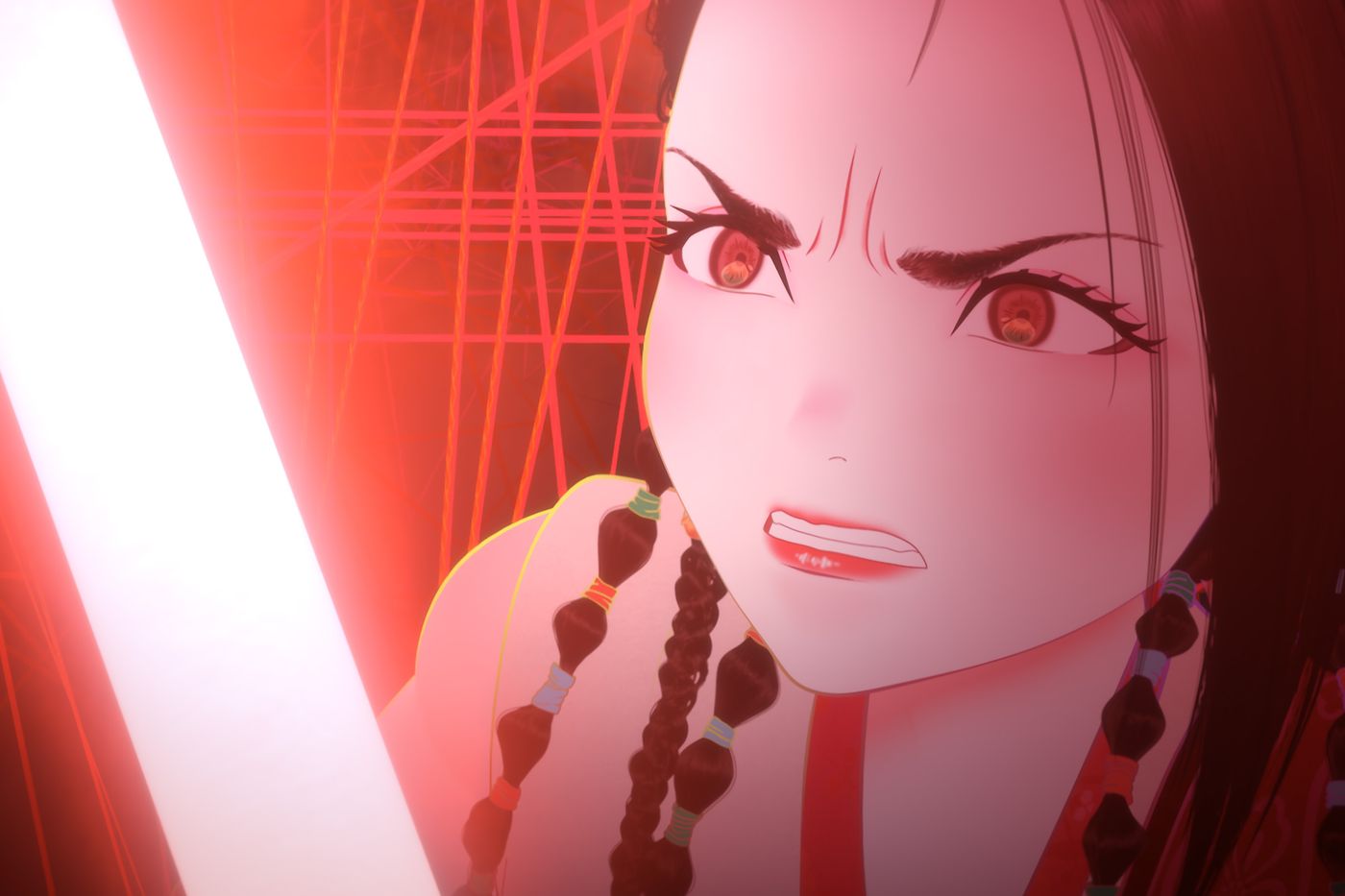
Photo: Lucasfilm Ltd.
The first volume of this animated anthology based in the wider universe of Star Wars made a splash through its myriad styles of anime; its nine shorts were made by seven prolific studios including Science Saru, Studio Trigger, and Production I.G. After a second international volume with standout works from Cartoon Saloon (based in Ireland), Triggerfish (South Africa), Studio Mir (Korea), and El Guiri (Spain), this third edition returns to its roots with another season produced by various Japanese studios. Some parts of the volume were made by returning directors, like Takanobu Mizuno, who directs a sequel to “The Duel” with “The Duel: Payback” (produced by Kamikaze Douga), or Hitoshi Haga, who follows up “The Village Bride” with “The Lost Ones” (produced by Kinema Citrus), the latter a story of a lone Jedi saving refugees from a planet the Empire destroyed mining carbonite (the stuff they froze Han Solo in). Those particular adventures are highlights, hardly feeling like a case of diminishing returns as the directors expand on those first stories as well as the striking aesthetics that defined them. New stories also stand out, like “Yuko’s Treasure” (Kinema Citrus, again), an adventure that places plucky children at its center.
But Star Wars Visions may have no greater success story than “Black”, a 15-minute opus from the legendary Shinya Ohira (made with David Production). Ohira, known for his fluid and intense linework, applies that idiosyncratic style to what can be described only as a Stormtrooper’s brain being turned inside out with each wild scene morphing into the next as the animation expresses the torment of violence and the soldier’s yearning for an escape from his weaponization. A frenzy of jazz music from composer Sakura Fujiwara matches the chaotic and phantasmagoric imagery, beautifully rendered by a mind-blowing alchemical mixture of some of the industry’s greatest talents from across generations (look out for names like Toshiyuki Inoue and Takeshi Honda alongside Weilin Zhang, Bahi JD, Vincent Chansard, and Hakuyu Go as well as production designer Aymeric Kevin). It’s nothing short of miraculous, and that something so miraculous can still emerge from Star Wars is a testament to how vital Visions is.
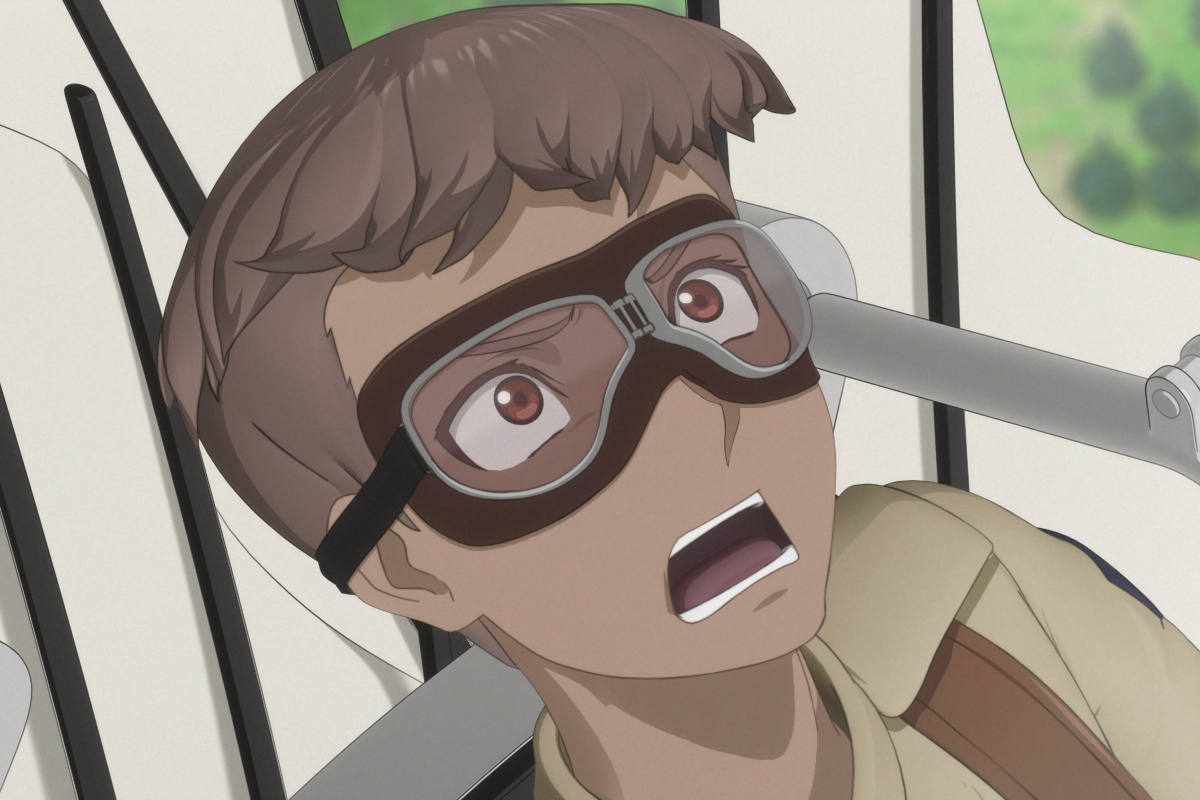
Photo: Netflix
Leviathan, an adaptation of the novel from writer Scott Westerfeld and illustrator Keith Thompson, is a 20th-century alt-history that begins with Archduke Franz Ferdinand’s son Aleksandar fleeing in the wake of his father’s assassination, though the world war that follows looks very different. It’s an idiosyncratic mix of steampunk and fantasy: Austria-Hungary uses mechs; the British use flying sea creatures. The titular Leviathan is a whale doubling as an airship, the crew of which serves as the catalyst for the main adventure. The series follows Aleksandar and Deryn Sharp, a British Navy hopeful who disguises herself as a man (“Dylan”) in order to enlist, as they each navigate a strange and fully realized world — eventually crossing paths with the Leviathan and each other.
Leviathan, which was directed by Christophe Ferriera, comes from Orange, the animation studio behind Trigun: Stampede and Godzilla: Singular Point. Orange’s handling of CG animation is among the most natural feeling in an anime industry still coming to grips with the medium, often finding a happy halfway with the tactility of 2-D animation through its painted backgrounds and other little moments of mixed media. It’s but one of a number of classical touches that lend the show its charm, like the Joe Hisashi–scored opening titles and equally excellent score from Nobuko Toda and Kazuma Jinnouchi.
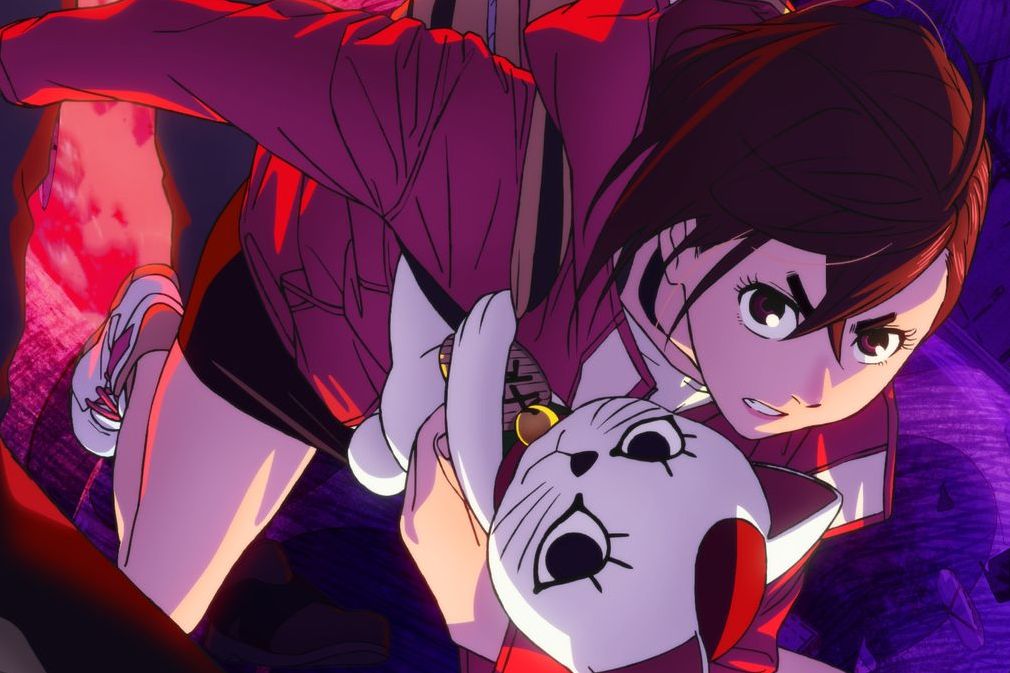
Photo: ©Yukinobu Tatsu
Anime’s premier sci-fi-romance-horror-action-comedy returned with a second season just as strange and sweet as the first. Picking up directly where it left off, the Science Saru–produced adaptation of Yukinobu Tatsu’s manga saw the superpowered gyaru Momo Ayase and her soft-spoken (and also superpowered) friend, Ken “Okarun” Takakura, solving a haunting involving Momo’s rambunctious childhood friend, Jiji. Things quickly take a turn for the grotesque, and the three have to fight their way out of an underground tangle of buried houses while contending with a giant worm as well as a furious ancient spirit. And that’s just the opening arc!
Dan Da Dan is known for tying a vast range of homages to Japanese pop culture into its nods to traditional folklore. One highlight sees a rock band that looks eerily like the ’80s group X Japan acting as a conduit for an exorcism by playing an old-school speed-metal track. Later, the series channels Mobile Suit Gundam and Godzilla all at once. While throwing everything but the kitchen sink at the wall in this manner might sound incomprehensible, the developing romance between Momo and Okarun cuts through the chaos. As for the depiction of that chaos, while this season felt artistically restrained in some places compared to the explosiveness of the first, things pick up with its fantastic and creatively directed finale.
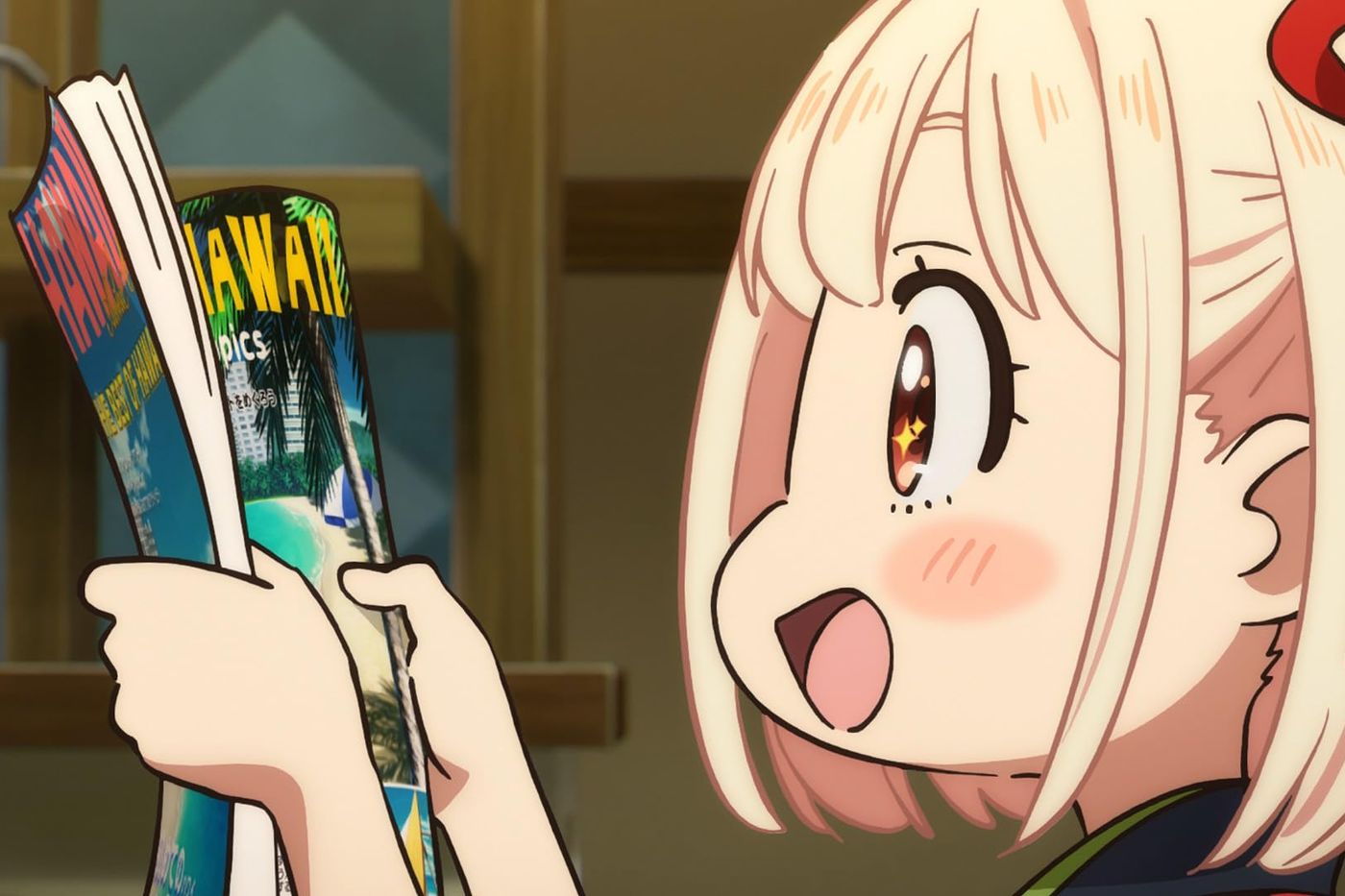
Photo: Crunchyroll
While not a full-fledged continuation of the fantastic action show Lycoris Recoil, this series of shorts recaptures the other half of the 2022 girls-with-guns series. It focuses squarely on the slice-of-life elements, following teenage assassins Takina and Chisato as they goof around in the LycoReco café. Each is incredibly entertaining, a set of escalating gags that reminds us why Lycoris Recoil was so much fun in the first place.
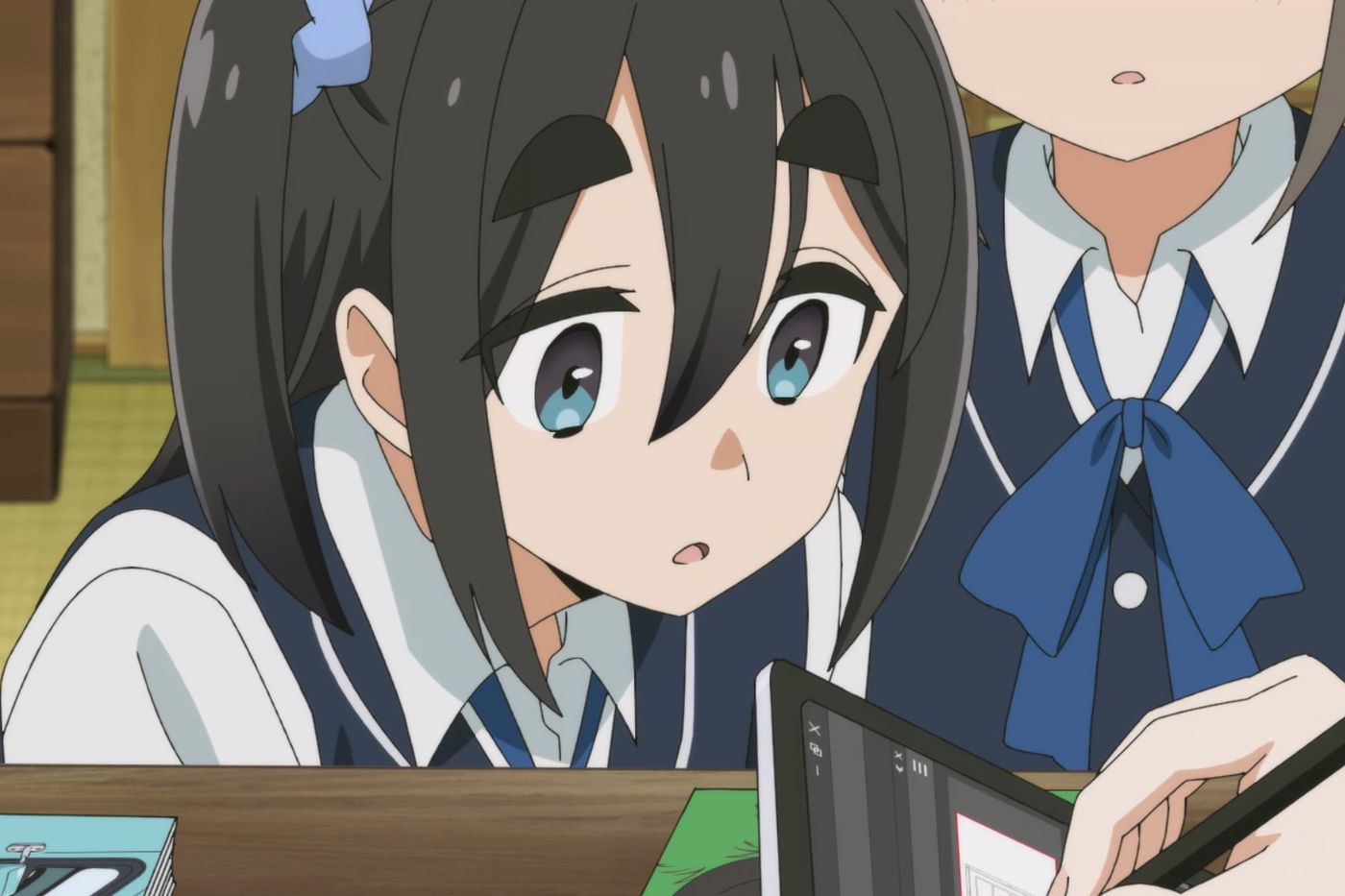
Photo: CAFRO/HOUBUNSHA, ANIPLEX, SOIGNE
It seems as though every year has at least one outstanding anime about the joy of artistic expression. So far, the top spot may belong to Mono. It begins with a pair of girls struggling to find a new direction for their photography club, but while this search remains a through-line across Mono, it’s increasingly clear that the show isn’t too concerned with centering any kind of serialized story around the club. It’s a framework as loose and laid-back as its art style, dipping its toe into many different hobbies, artistic media, places, and cultural history.
As the photography club merges with the cinema club and the girls start hanging out with the adult manga artist Haruno, that reach expands — not just into the world of manga and anime (and, at one point, competitive eating) but also into sports. One of the show’s most spectacular sequences centers on downhill skateboarding and longboarding. Each of these trips inspires Haruno’s work, a little meta-acknowledgement of the appeal of the show itself, while thinking about the ways different art media capture or approximate life as we see it. Each episode is both thoughtful about the process without being overly instructive, letting the joys of these little adventures take priority.
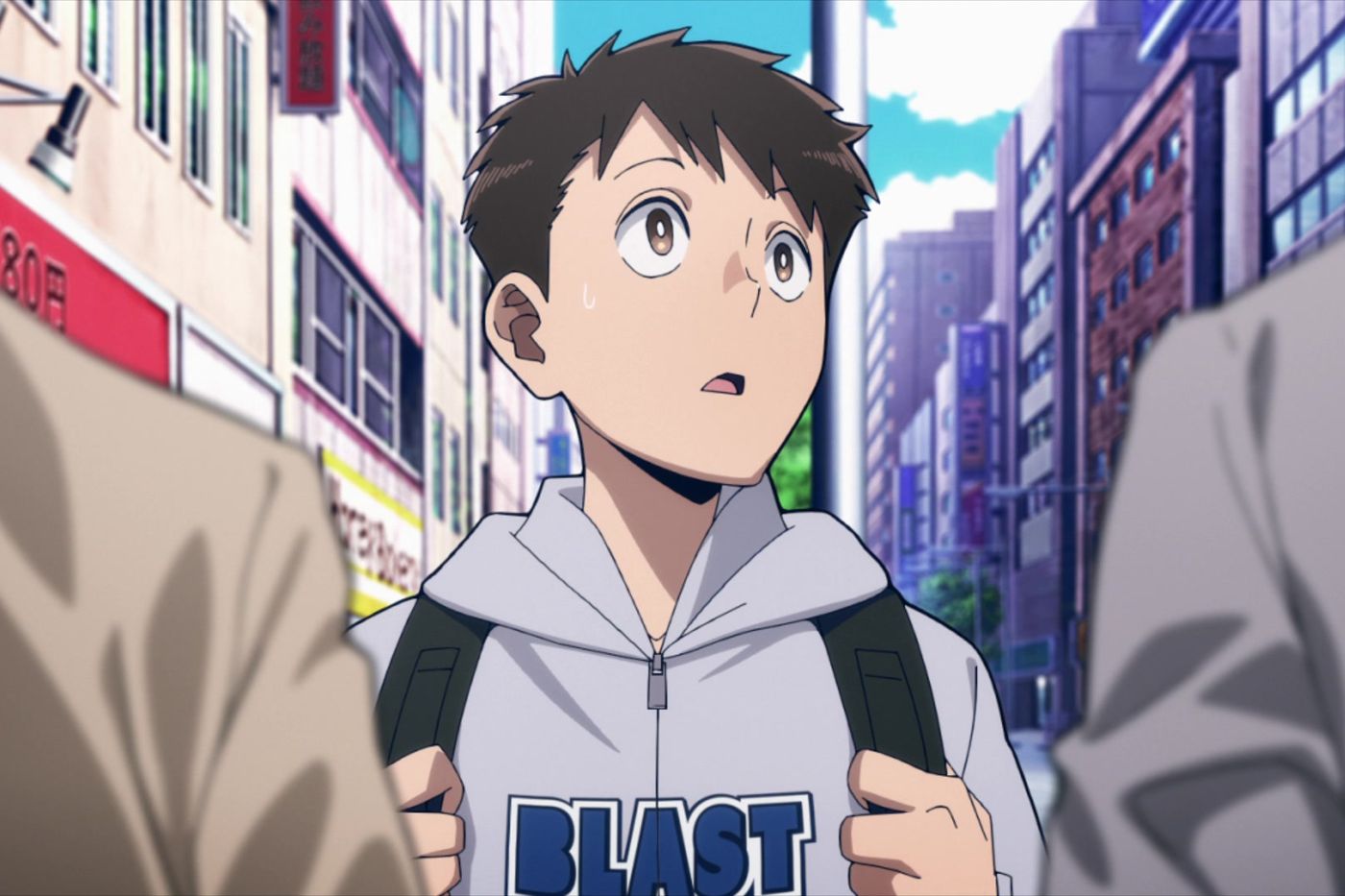
Photo: Crunchyroll
A spinoff from the megahit shonen series My Hero Academia, Vigilantes approaches the same world from a different angle: street-level heroes without a license. The superheroes of My Hero Academia are somewhere between celebrities, first responders, and the X-Men. In Vigilantes, the main cast’s lack of branding and franchising makes for a more traditional comic-book story. Though Koichi is cut from the same cloth as Izuku Midoriya (they’re both do-gooders by nature and fanboys of the Superman-esque hero All Might), they have different struggles. Koichi has to think more about balancing a social life (and a part-time job at Family Mart) with a secret identity.
As My Hero Academia enters its very serious endgame, Vigilantes returns to a sense of lighthearted absurdity. One of the season’s funniest visuals is of a purse snatcher whose power is described only as “soccer” dribbling a ball and doing a rainbow flick while fleeing the scene.
This approach doesn’t mean Vigilantes feels like a step backward — if anything, it’s refreshing. The show benefits from lower stakes and a tighter focus with its smaller cast of misfit characters, not to mention its iteration on the visual language of its parent show. Over time, My Hero Academia began to lean into the look of western comic books, and Vigilantes doubles down: Onomatopoeia and halftone dots accompany some pleasingly bold linework and bright colors. While it’s perhaps a better fit for those already familiar with the more grandiose side of the franchise, it’s not a bad leaping-on point for people who love a good old-fashioned superhero story. (Also, they fight Godzilla in one episode.)
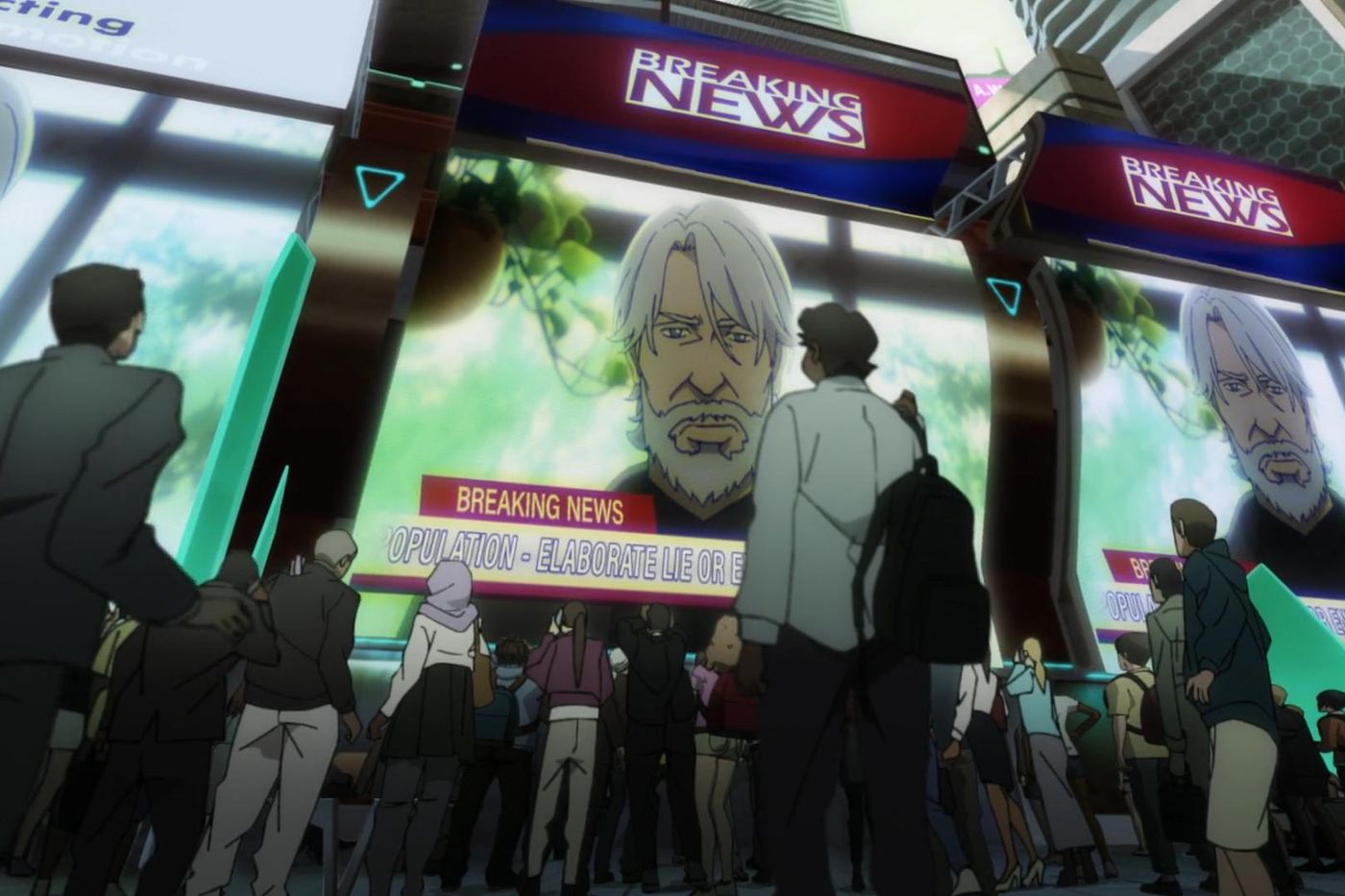
Photo: Adult Swim
From Shinichiro Watanabe, best known as the creator of Cowboy Bebop, comes Lazarus, a globe-trotting thriller involving a race against the clock to save humanity from extinction. Rogue scientist Dr. Skinner releases Hapna, a miracle drug that, years later, is revealed to be a Trojan horse set to kill everyone who took it. The drug was so popular it was used recreationally, so humanity’s time may really be up. With only a month left, a ragtag group of criminals, Lazarus, is formed to stop Skinner’s plan.
The show itself can be a little bumpy — it’s hard not to think of Watanabe’s more successful projects by comparison, and the character work sometimes feels thin. But it has style to spare with action choreography from John Wick director Chad Stahelski and his studio, 87eleven, as well as a score from the incredible trio of saxophonist Kamasi Washington and electronic musicians Bonobo and Floating Points. Lazarus is most comfortable among spectacle — its standout fourth episode is worth the price of entry — but it offers interesting thematic touchstones using the drug crisis as a means to examine social inequality on various levels.
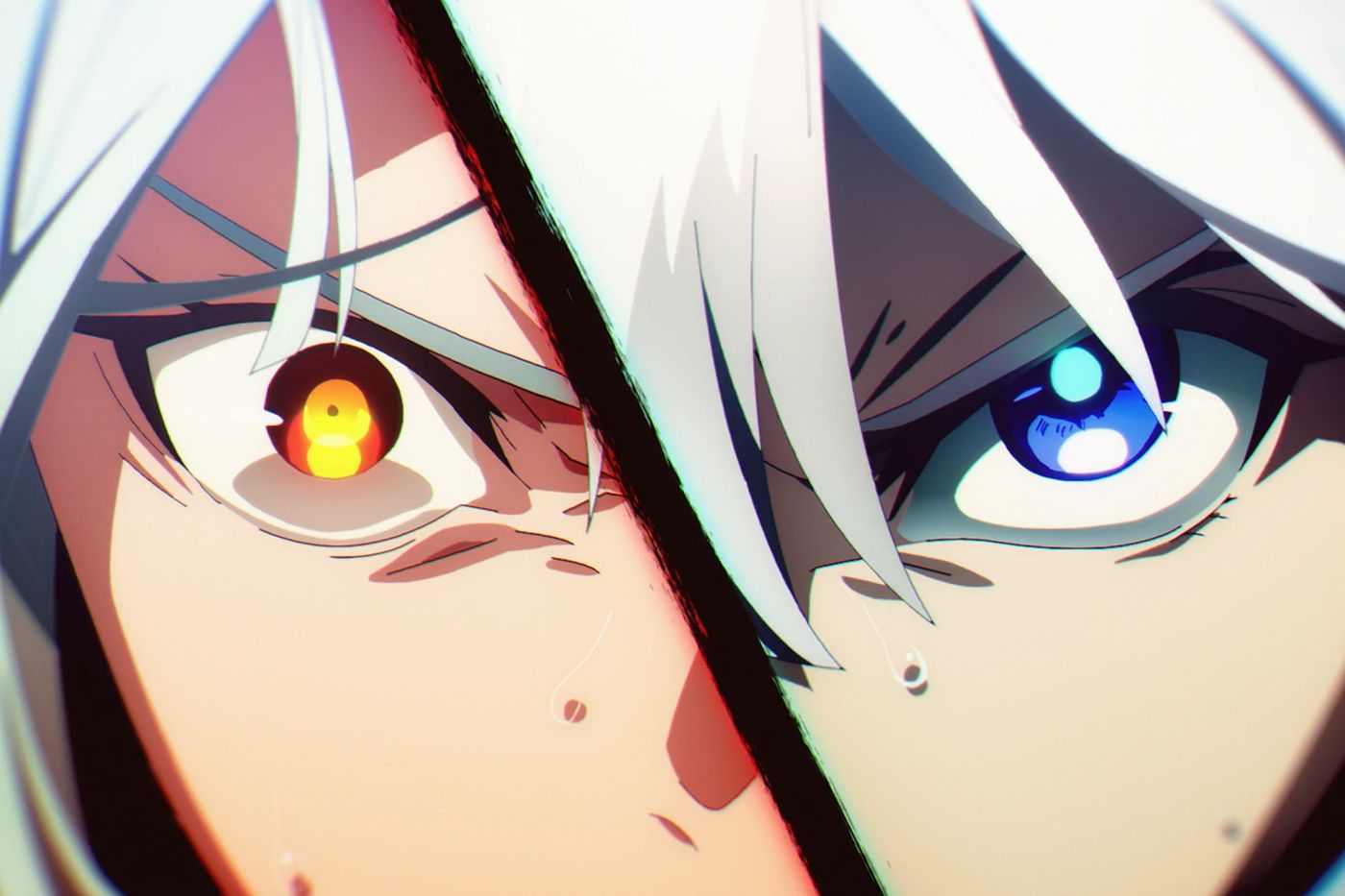
Photo: Netflix
Umamusume: Pretty Derby brought new meaning to the term horse girl, by making it literal: The multimedia franchise is based on the concept that after racehorses die, they are reborn in another world as anthropomorphic umamusume (literally horse girls). There’s not really much difference between this world and the real one, other than the girls running derbies on two legs at superhuman speed. They also have lives beyond the track as well as hopes and dreams, turning the show into a different kind of sports drama than the typical horse-racing fare. It’s not about jockeys and their partners as much as the racers themselves, with closer consideration of running form and technique (and even physics). This makes some nods to the real world even more surreal: like the use of grainy old black-and-white footage of horse girls running in the 1950s.
Cinderella Gray isn’t the first anime adaptation of the series, but it’s accessible to newcomers because it centers a new cast of characters who attend Kasamatsu Academy to train for races. This season is about Oguri Cap, who has a real-life counterpart, as do many of the girls, and who is amusingly hyperfocused on running. Any attempted hazing or bullying simply bounces off her; she’s just happy to be there. As crazy as the surface premise of “horse isekai” sounds, Umamusume is well made and full of quick, intense sports action.
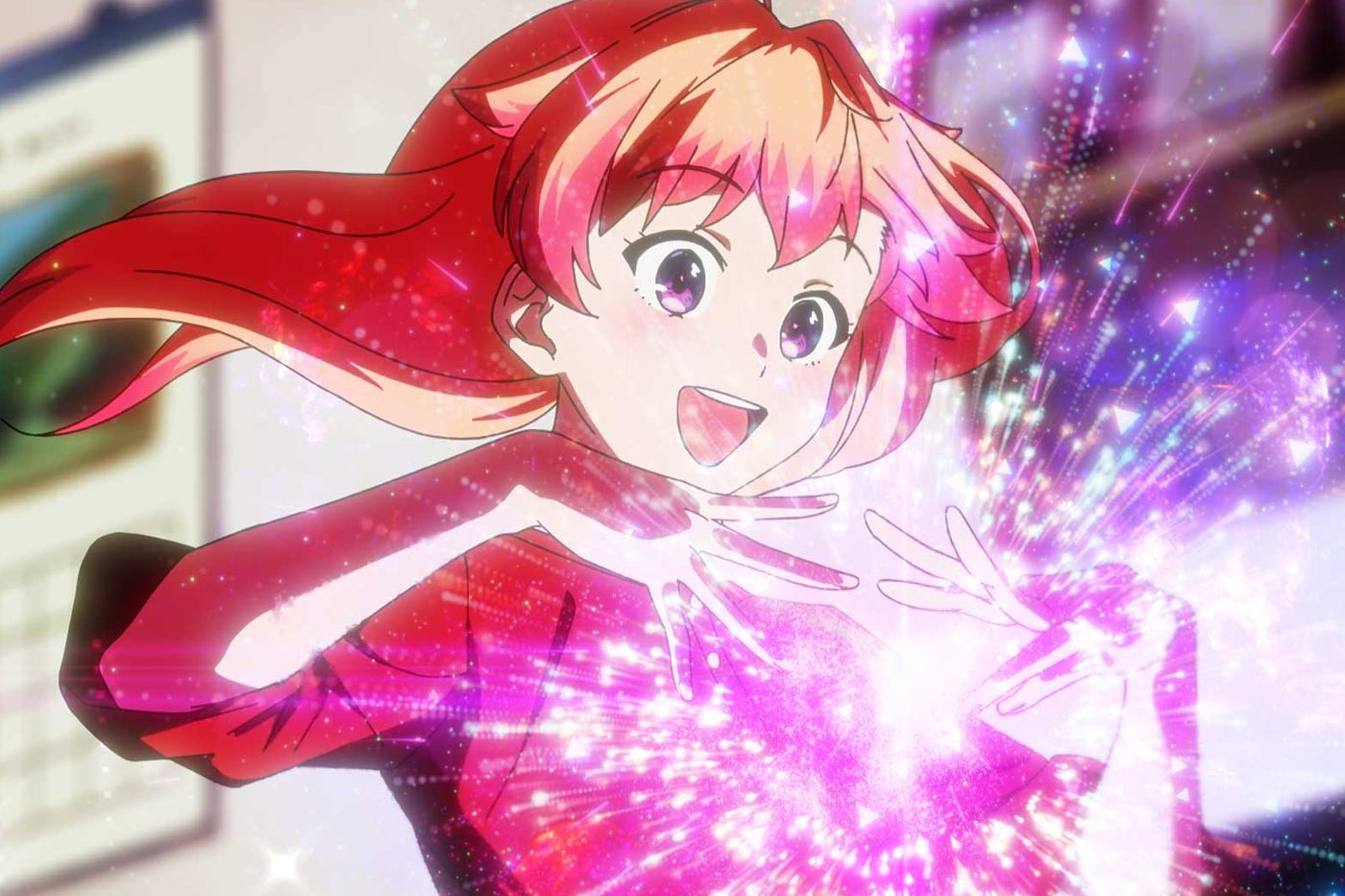
Photo: KentaShinohara/SHUEISHA, WITCHWATCH Production Committee, MBS
The breezy Witch Watch is easy to like — there’s a joke for pretty much everyone, whether it’s a wild slapstick gag or some reference-heavy patter among its cast of teenage eccentrics. The show starts, as many anime romances do, with a childhood friendship, here between the chaotic witch-in-training Nico and the taciturn ogre Morihito. The two reunite after a long time apart, when Nico’s mother, fearing a deadly prophecy, sends her daughter to live with him.
That sounds intense, but Witch Watch is mostly pretty lighthearted. From the moment Nico literally crashes back into Morihito’s life (through his living-room window), the show is built around little vignettes. Most are about the characters desperately trying (and failing) to keep things under control. Sometimes, that’s Nico trying to fix a problem with magic, which causes only bigger and funnier problems through unpredictable side effects. Other times, it’s a teacher who tries to hide her manga and anime fandom from her students out of embarrassment. Though the animated craft of Witch Watch doesn’t usually meet the high bar of its incredible opening (directed by Megumi Ishitani, whose One Piece Fan Letter made this list last year), it’s never less than charming.
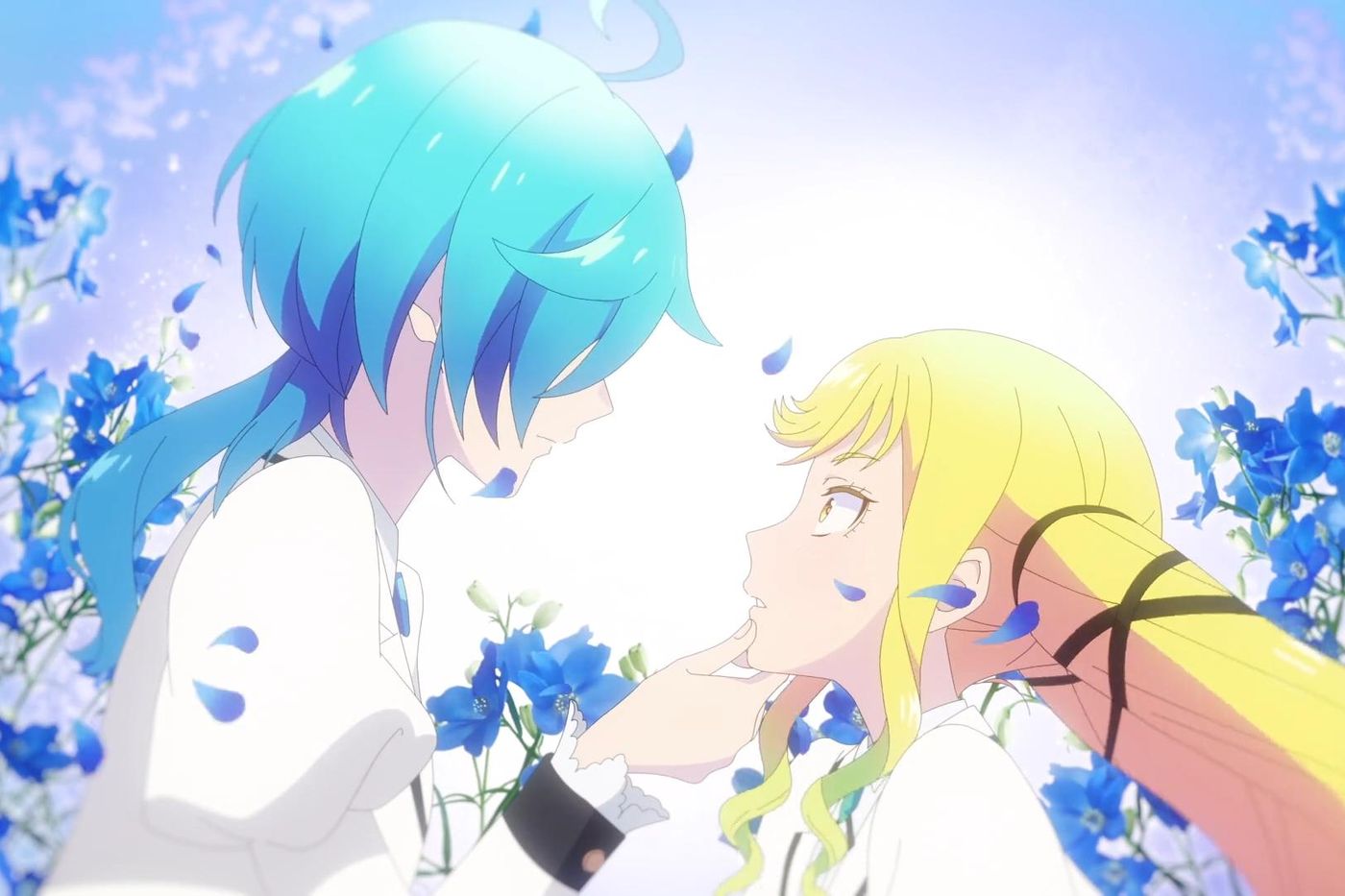
Photo: Bandai Namco Pictures
This anime from director Shinya Watada wastes no time in showing off the delightful contrast between its posh girls-academy setting, where women are expected to be delicate, and its main cast’s enthusiasm for rock music. Watada cuts between mannered conversations in the dining hall and a character playing a raucous drum solo. Then we see the difference between main character Lilisa Suzunomiya’s rough (and real) internal monologue and her outward presentation as someone “respectable.” She hides her passion for playing electric guitar from her upper-class peers, keeping up appearances as a member of the prestigious family her mother married into.
She finds a partner in crime in Otoha, the pride of the academy, who is renowned for her refinement — but who happens to be a total beast on the drums with an appropriately aggressive attitude to go with that talent. The 3-D motion-capture animation for the musical sequences briefly feels awkward but quickly becomes dynamic as 2-D visual effects are added, such as hand-painted outlines resembling electricity crackling around the characters.
All these young punks and musical savants appearing under the repressive atmosphere of the academy may require some suspension of disbelief (as does Lilisa’s gravity-defying hair). But the feeling of liberation the moment Lilisa starts shredding on a Stratocaster (or when she and Otoha start screaming at each other) is worth that extra step.
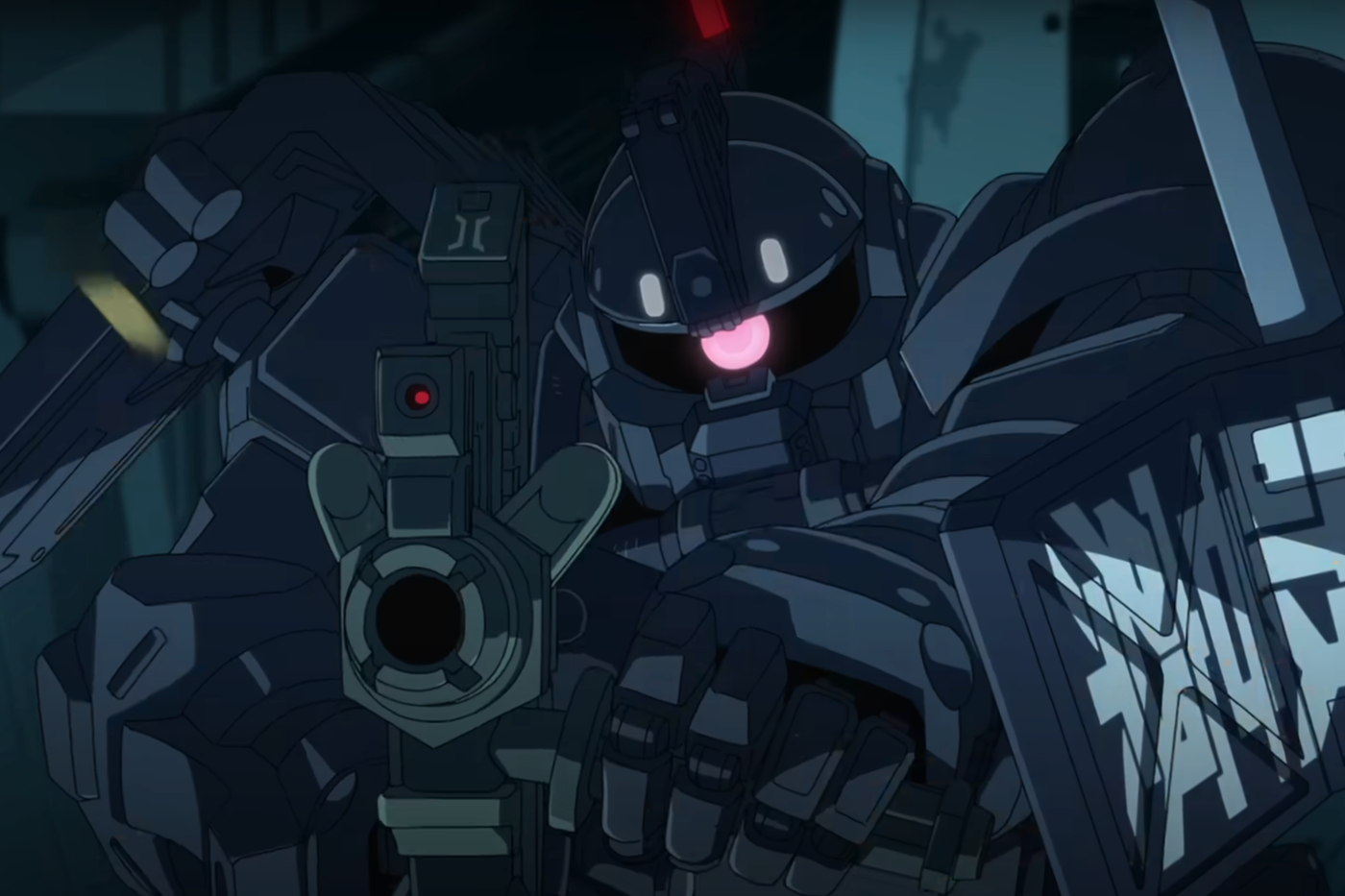
Photo: GundamInfo via YouTube
The latest entry in the sprawling Mobile Suit Gundam franchise is less newcomer-friendly than its predecessor The Witch From Mercury, as well as its subtitle being harder to pronounce (“G-Kwuuks”, apparently). It essentially remixes the timeline from the original show, creating a divergence point by having the antagonist Char steal the Gundam before the protagonist Amuro can get to it.
But while the knowledge of Tomino’s classic series helps, GQuuuuuuX is enjoyable (and beautiful) enough without this context, especially with its delightful new cast of characters: the tiny, angry Machu is particularly easy to like. Directed by Kazuya Tsurumaki and written by Yōji Enokido — the artists behind FLCL — GQuuuuuuX is a pleasing fusion of his visual sensibilities with the politically charged mecha action of Gundam. The cartoonish character designs (courtesy of take, known for their work on Pokémon) pop with vivid color, as does its cylindrical space-colony setting.
The second episode may be pure fan service for longtime fans, full of Easter eggs and music stings from the original show, but there’s still more than enough for fresh eyes to enjoy — and no doubt, some exciting surprises in store for those in the know.
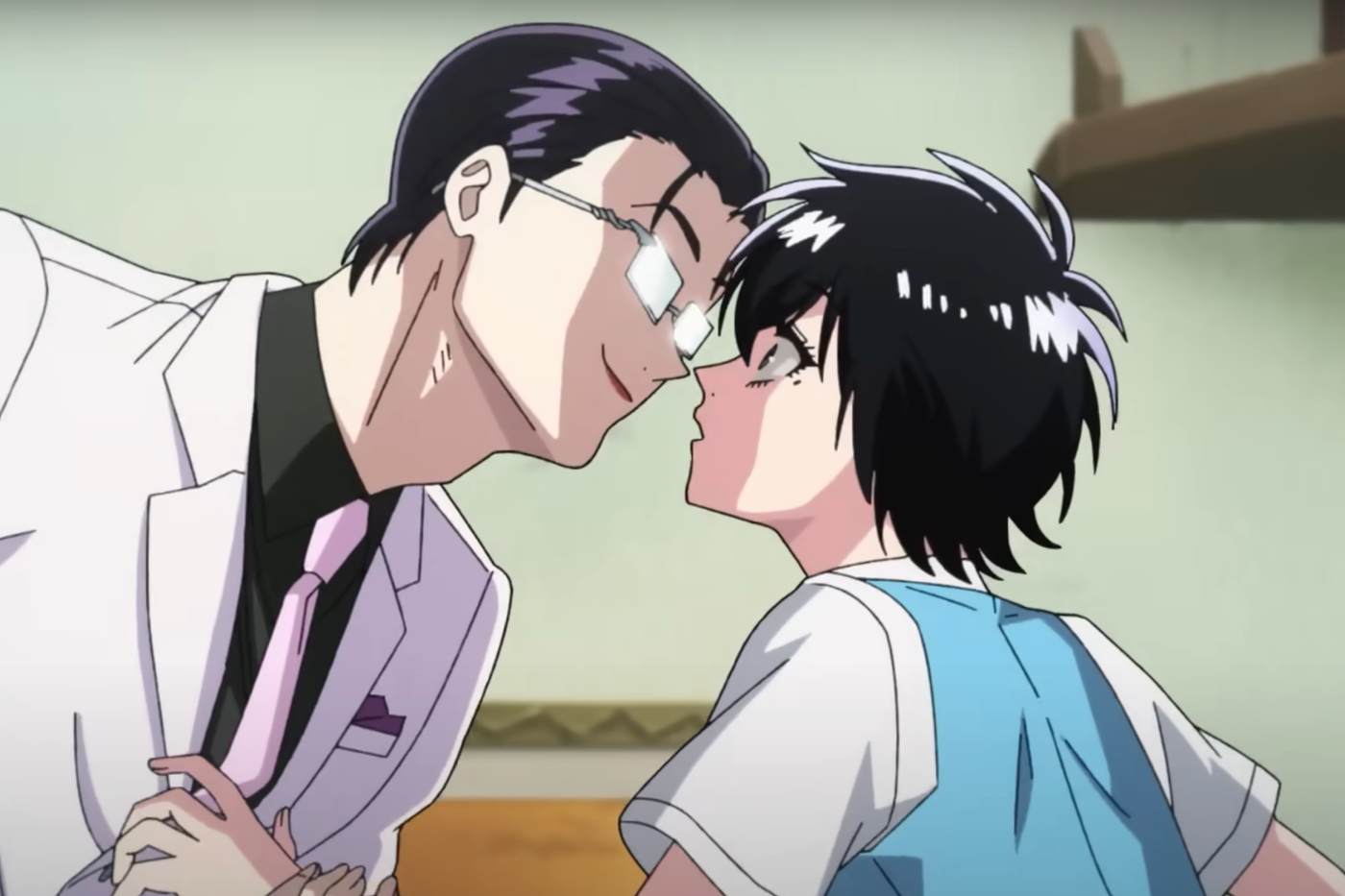
Photo: Crunchyroll via YouTube
The “generic” of its title is a misnomer, as this adaptation of the manga by Jun Mayuzuki gives a romance between two 30-something real-estate agents a significant dose of sci-fi spookiness. It’s set in a reproduction of Hong Kong’s Kowloon Walled City, albeit with a strange diamond-shaped device hovering over it. Reiko Kujirai has a budding romance with her co-worker Hajime Kudou, only to realize that she’s been in love with him before but doesn’t remember it.
The Eternal Sunshine–style twist is just the beginning of Kowloon Generic Romance’s mystifying plot, each episode adding new complications: like the simple fact that Kudo is reciting lines from their past relationship back at Kujirai, or the snake-tongued doctor who takes an interest in them both. It’s not the best-looking show of the season, but at the very least the characters feel unique, and Yoshiaki Iwasaki embodies their constant consideration of nostalgia’s allure through the hazy glow of its street scenery. The overall uncanny nature of a second Kowloon Walled City becomes an overbearing symbol of its characters desire to return to a past that’s been long since obliterated.
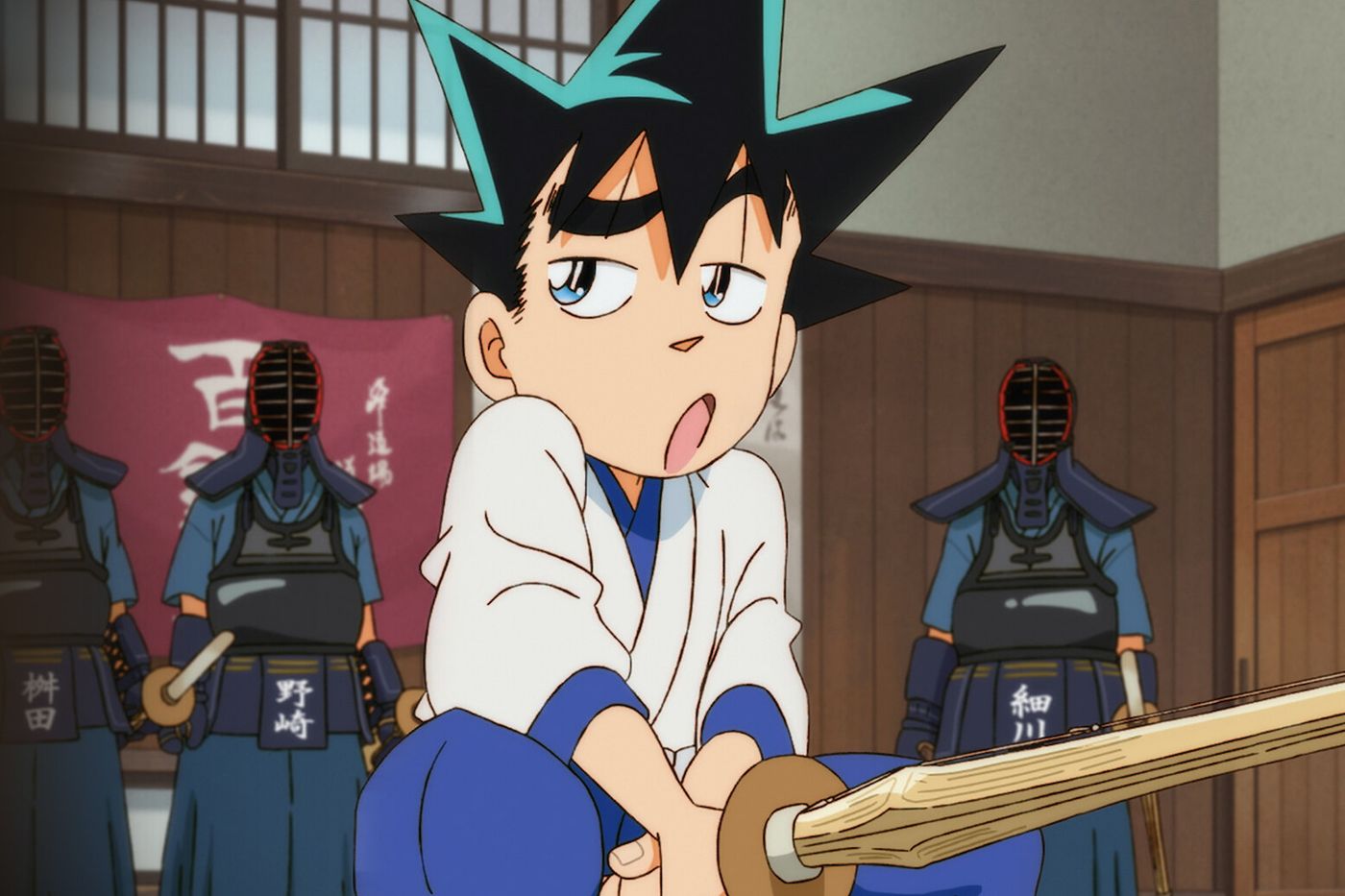
Photo: Netflix
It’s been a big 12 months for reboots of anime classics — Ranma ½ was a standout of last year while this season’s Anne Shirley is also featured on this list — but Yaiba: Samurai Legend refuses to fade into the crowded pack. As in the original, Yaiba is a little samurai boy who has mostly spent time training in the forest with his father. One day he moves to the city and makes an enemy of Takeshi Onimaru, going to extreme lengths to best him in a duel. Seeking revenge, Onimaru impulsively picks up a demonic sword in a shortcut to power, setting off a grand adventure. Directed by Takahiro Hasui at WIT Studio (Vinland Saga, Ranking of Kings), the show appropriately feels like a blast from the past, full of classical design touches, but is still fresh thanks to the high energy of its gorgeous, kinetic animation.
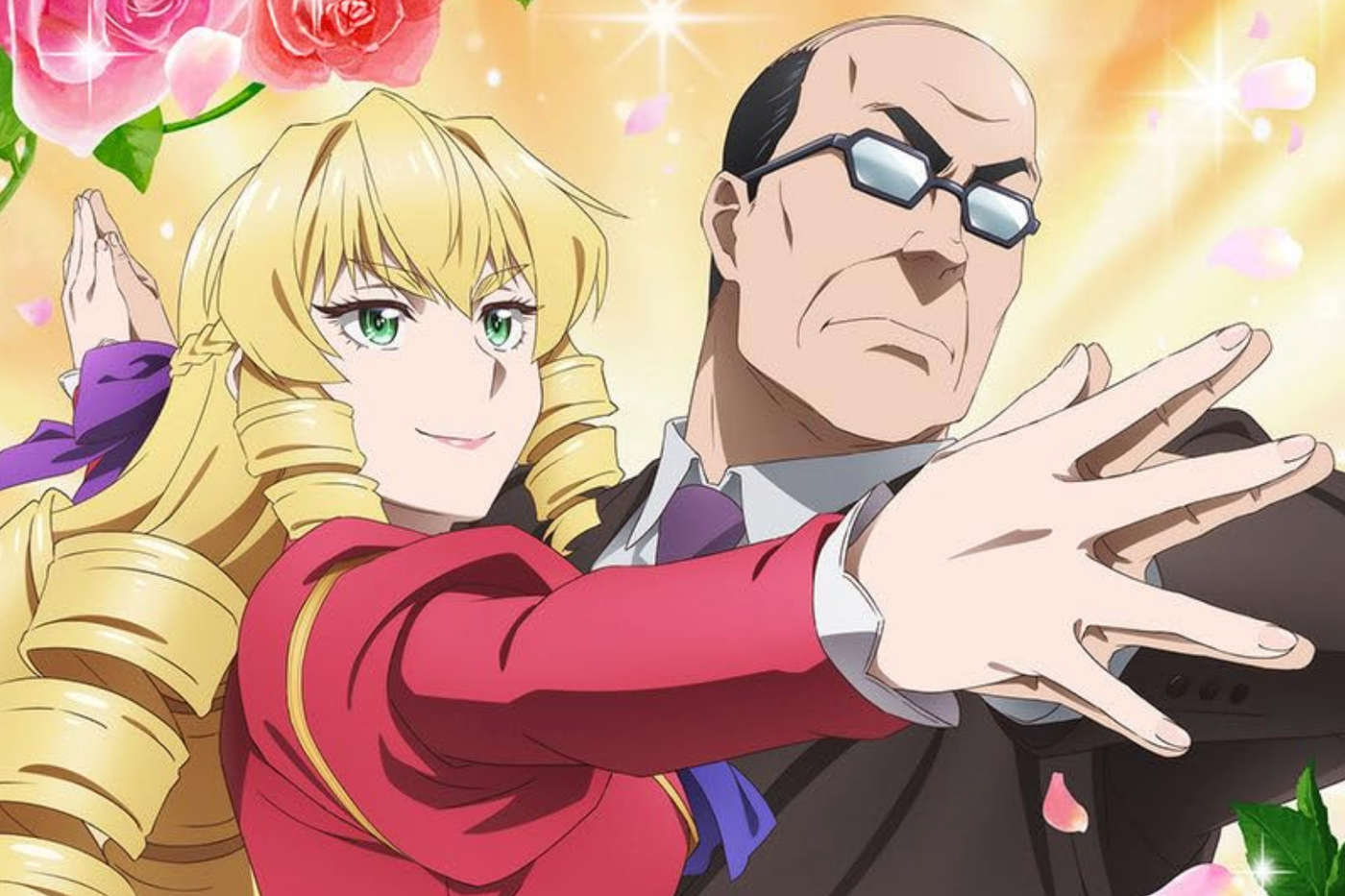
Photo: HIDIVE
Isekai (“another world”) is a genre notorious for junk, simply because of the sheer influx of shows of the kind that overwhelm every anime season. But with a few small tweaks, From Bureaucrat to Villainess turns familiar cliche into winsome comedy.
The premise, as always with this genre, is in the title: A 52-year-old bureaucrat and father has been hit by a truck (classic) and reborn in another world as the teenage villainess of his daughter’s favorite otome game (typically, romance games aimed at women). To anyone familiar with the genre, which often goes to outrageous places, this is bog standard, but From Bureaucrat to Villainess puts a fun spin on it simply by having the main character be a very normal and respectful guy who, despite his vast reserves of otaku knowledge, only kind of knows how things work in this particular video-game world.
The show isn’t necessarily doing anything wildly off book — there are at least three other series about being reincarnated as the villainess in a fantasy story and failing at it. From Bureaucrat to Villainess is far from the first of this burgeoning subgenre (it even makes a joke about how expansive this heritage is), but it stands out for making its kindly characters both the draw and the joke, reinforced by solid animation performance and a great sense of timing as it goes for good-natured jokes rather than easy ones.

Photo: Disney+
A lot of sports anime are firmly on the side of the (usually preternaturally gifted) newbie to keep the audience on the journey with them as they learn the ropes. This isn’t to say that the formula is tired — a lot of great series have been made this way (go watch Haikyuu). But Medalist tweaks that equation a little, embedding itself from the perspective of the teacher as it begins. Tsukasa is 26 and feeling a little wayward, regretful about his late start in figure skating. Along comes 11-year-old Inori, who has a gift for it but is wary of starting at a more advanced age than her peers did. Thanks to the abrupt end of her older sister’s career, the young Inori admits defeat before the journey has even begun, even though she clearly wants to try.
From the jump, Medalist finds a strong emotional hook in Tsukusa’s drive to validate Inori’s feelings about skating, and comedy in his inability to be reserved about anything — he immediately screams “she’s a natural!” while he’s meant to be playing it cool to encourage Inori’s mother to let her join the club. From there, Medalist finds its journey both in Inori polishing her self-taught skills while Tsukusa settles into his new role as a coach — not just in terms of honing her skills, but also soothing the anxieties that come with a new competitive sport, especially one as expressive as figure skating: the nerves, the pervasive self-doubt of whether you’re good enough or as good as the others. The sweetness of Medalist comes from its assertion that as much as skill or hard practice, sometimes all you need is a little validation at the right time.
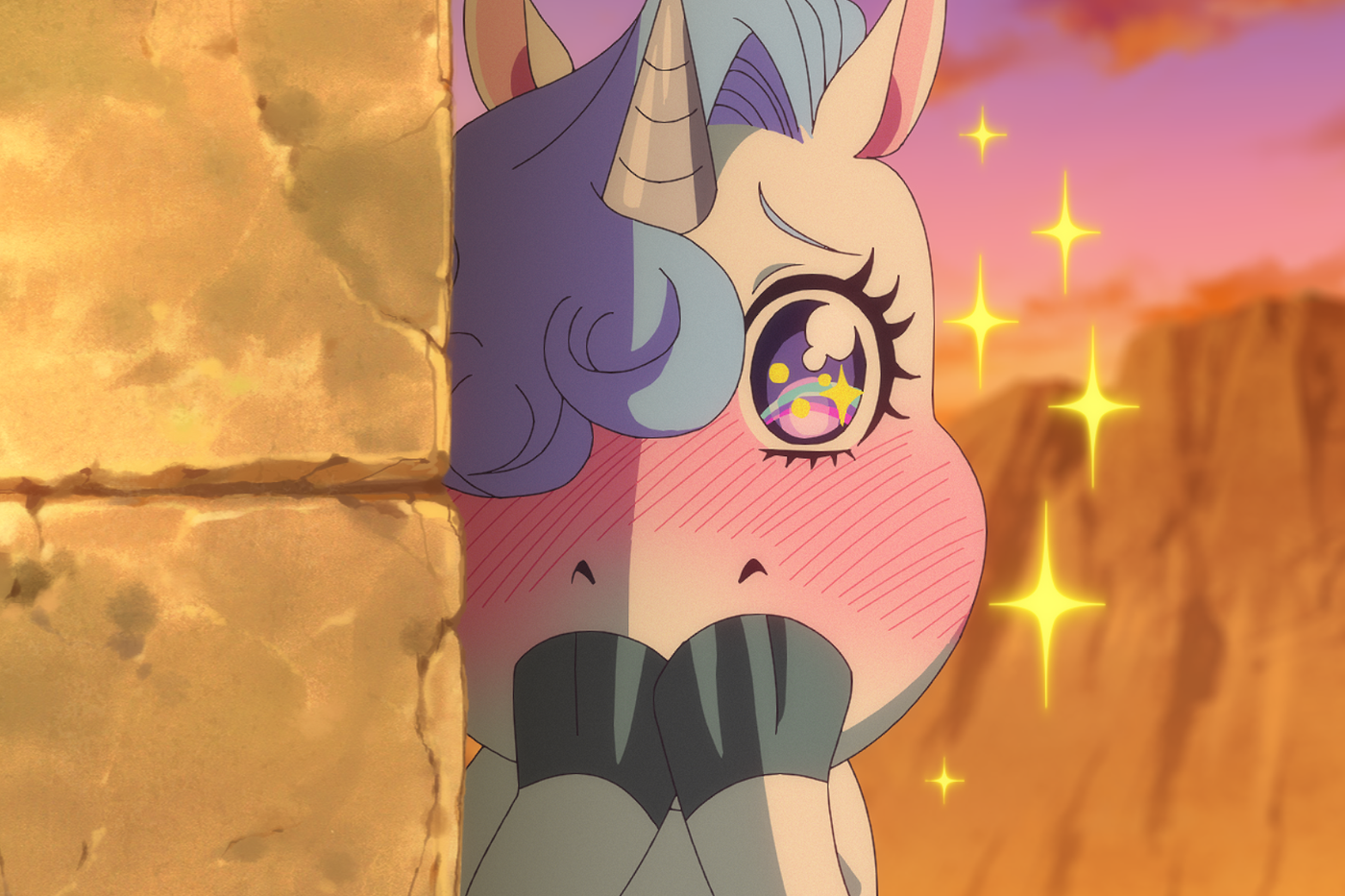
Photo: ©ZENSHU/MAPPA
The untimely death of the animation prodigy Natsuko, while on deadline for her first feature film, launches her into the world of an anime film she loved in her youth. (Yes, it’s another isekai.)
For a short time she revels in seeing her favorite characters brought to life in front of her, only to realize that the threats to them in the story are just as real. Though she’s far from suitable for combat, she’s able to use her drawings to summon anything from her imagination. This gives the show room to play with references to beloved works in some wacky and inspired ways, especially with the stipulation that she can never draw the same thing twice; one week it’s Nausicaa of the Valley of the Wind’s “God Warrior” sequence (famously animated in part by Hideaki Anno), the next it’s an Itano Circus of missiles as made famous by Macross, after that a feline fighter hitting an alien bug with a dragon suplex.
These instances aren’t just a fun way for Zenshu to break from the usual conduct of magic fights and throw other genres into the mix, but also the show’s most interesting visual touch. The summoned entities play with the form, emphasized as foreign objects by being presented as if they were raw drawings, without lighting and color. It’s a show of simple pleasures — like the comedy of a culture clash between a modern woman (who’s a bit of a gremlin, to put it gently) and the sword-and-sorcery fantasy world she crash-lands in, but it’s one bolstered by its display of affection for anime history and the act of drawing itself, despite its tribulations.
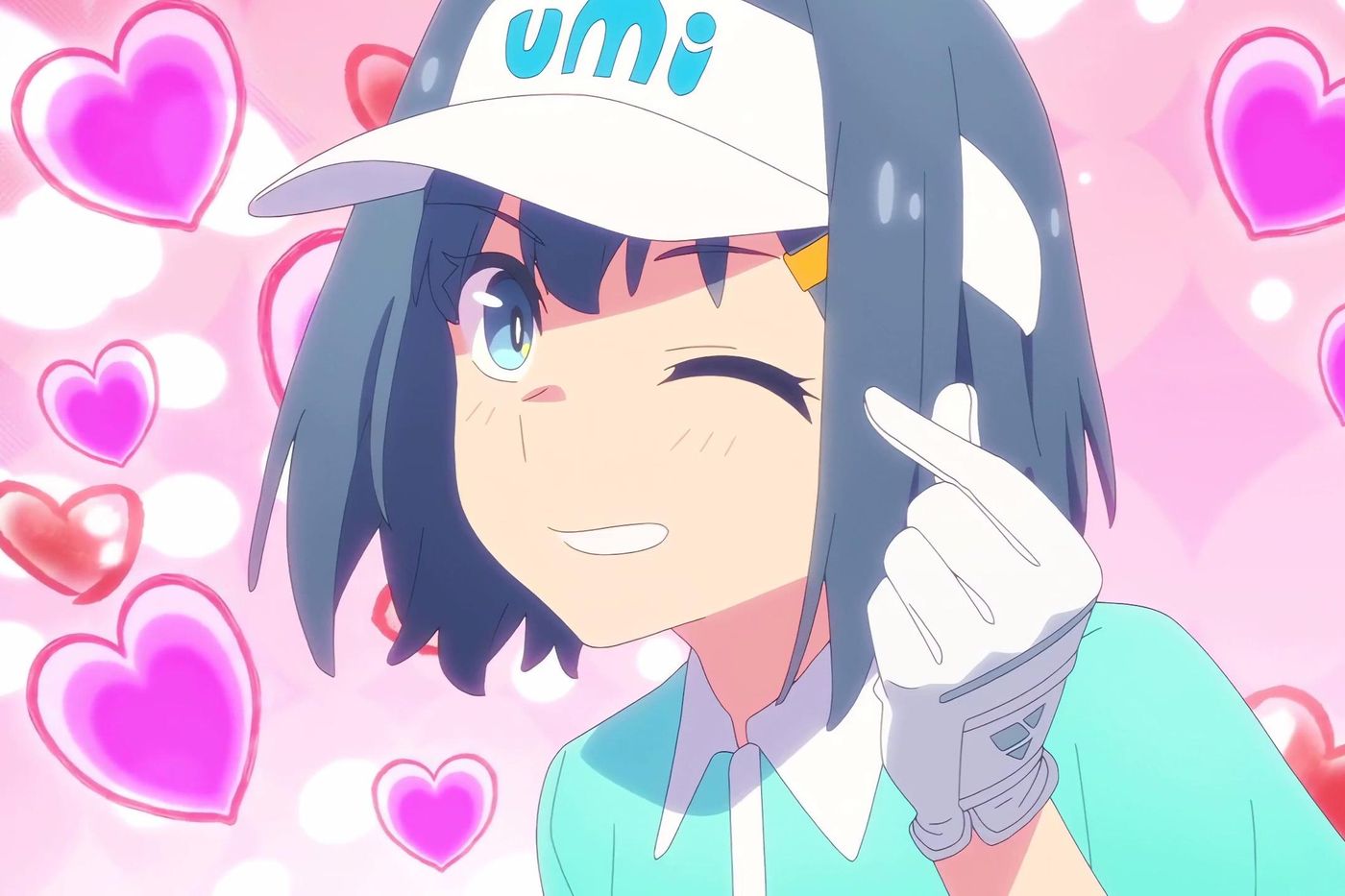
Photo: HIDIVE
Following an animated short released back in 2021, the colorful and gentle Sorairo Utility has graduated to a full TV series, the director Kengo Saito and his staff returning to expand on the high-schooler Minami’s exploration of the world of golf.
After trying out a deluge of school clubs — basketball, badminton, tennis, calligraphy — and failing at all of them, one day fate leads Minami to a driving range. It still goes clumsily, but there’s a beauty to it that captures her unlike the rest, not to mention Haruka, the girl who introduces her to the sport with her amusingly utopian viewpoint of golf (“it’s a sport that all kinds of people play, from the young to the elderly”). That sincere belief in the serenity of golfing is affirmed by the beatific animation.
Where some sports anime are about striving to be the very best in your field, Sorairo Utility is relatively laid-back in its attitude toward what makes a sport a worthwhile pursuit. But that doesn’t hold it back from occasionally landing within the boundaries of something like the silliness of Birdie Wing. The exaggerated animation of one episode pushes a cute competition between the girls and some golf store salesmen to absurd extremes, one man’s forearms growing to Herculean size as he attempts to big-league a 15-year-old in a challenge of who can hit the ball farthest. Beyond this moment of competitiveness, however, Sorairo Utility is mostly about relaxing and enjoying the journey, not just the result.