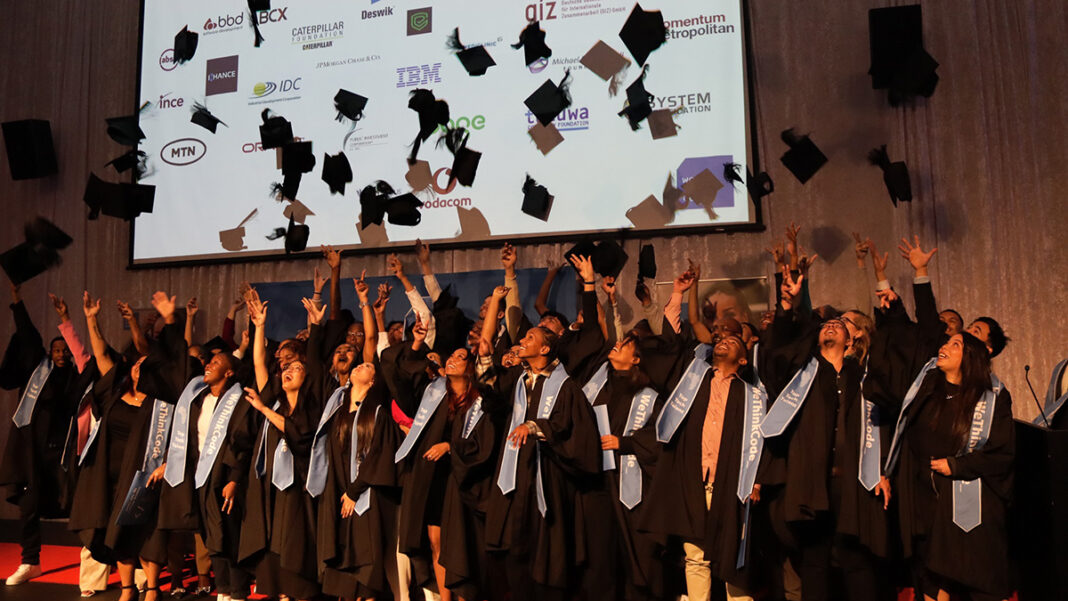
The Tech Industry’s Dirty Little Secret: WeThinkCode’s 2024 Graduates are the Perfect Example of the Skills Gap
The recent graduation ceremony at WeThinkCode’s Cape Town Campus was a stark reminder of the tech industry’s insidious problem: a crippling skills gap that’s driving companies to desperation. The 2024 cohort, consisting of 360 students, is the largest yet, and a whopping 199 of them have already secured internships – but is this a sign of success or a symptom of a deeper issue?
WeThinkCode, a software development academy, has been touted as a solution to the industry’s talent crisis, but a closer look at their numbers reveals a more troubling narrative. Despite their impressive graduation rates and job placement statistics, the academy’s emphasis on churning out "work-ready" software developers raises questions about the quality of education and the industry’s reliance on cheap labor.
According to WeThinkCode’s operations director, Kelebogile Motlhamme, the organisation has consistently achieved impressive outcomes with its students since its inception in 2016. But what does this really mean? Is it a testament to the academy’s effectiveness or a reflection of the industry’s desperation for any warm body with a pulse?
The tech industry’s reliance on WeThinkCode and other similar academies is a clear indication that the problem is not just about a lack of skilled workers, but also about a lack of diversity, equity, and inclusion. The fact that 181 females and 179 males make up this year’s graduating class is a positive step, but it’s still a far cry from the industry’s true representation.
As WeThinkCode continues to churn out graduates, it’s essential to ask tough questions about the industry’s priorities and the academy’s role in perpetuating the skills gap. Is it truly investing in the next generation of tech innovators or simply feeding the beast with cheap labor?
The answer lies in the numbers. WeThinkCode’s partnerships with leading hiring partners like BBD, MTN, Naagaro, Vodacom, and ABSA are a clear indication of the industry’s priorities. But what about the rest of the students who don’t make the cut? What about those who don’t secure internships or jobs? Are they simply discarded, left to fend for themselves in a cutthroat industry?
The tech industry’s skills gap is a complex issue, and WeThinkCode’s 2024 graduates are just the tip of the iceberg. It’s time to take a closer look at the underlying problems and challenge the status quo.