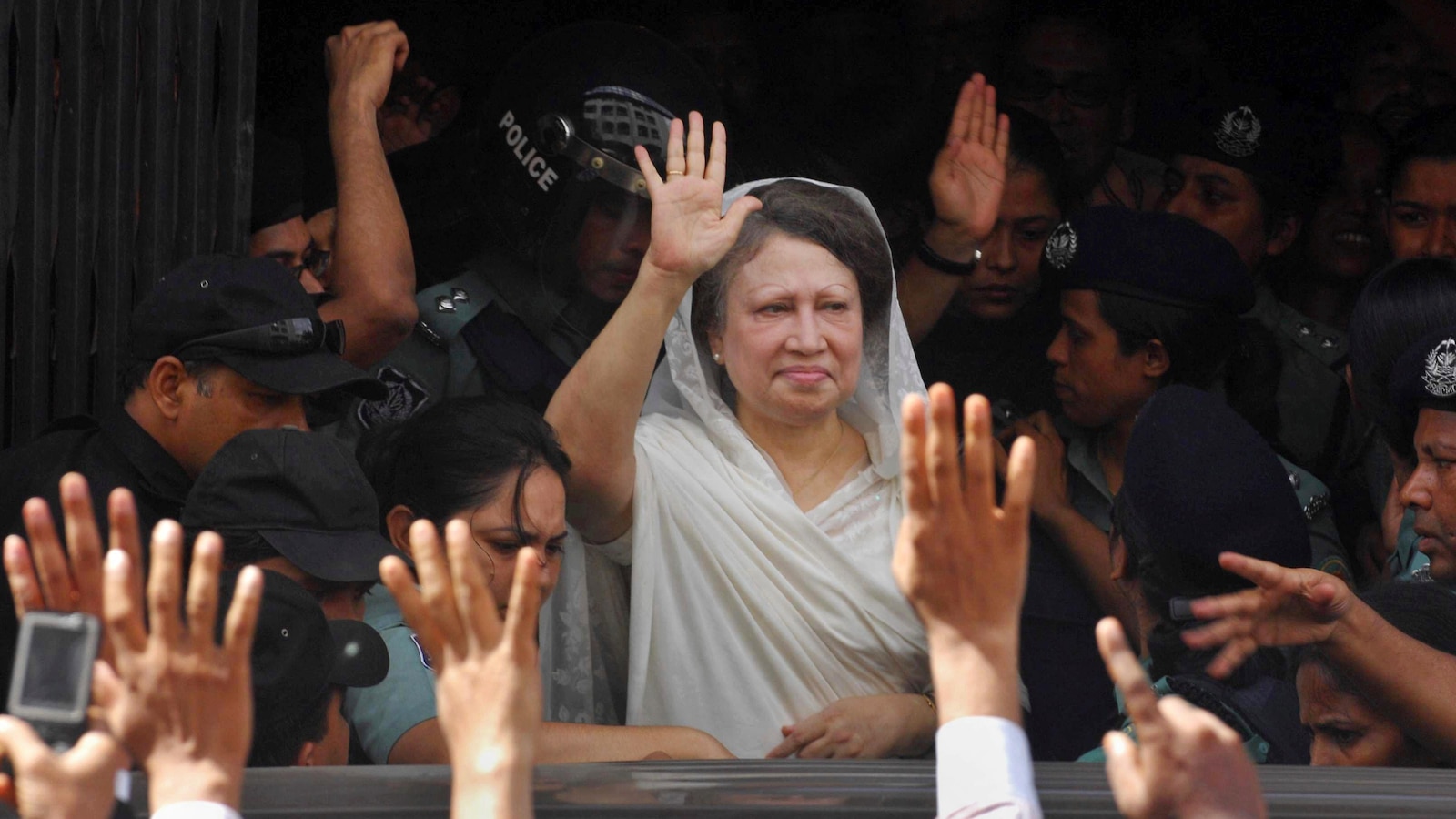

DHAKA, Bangladesh — The FIGHT is OVER. Khaleda Zia, the titan whose BITTER feud with rival Sheikh Hasina DROWNED a nation in chaos, is dead at 80. But her death is NOT the end of the story—it’s the opening of a chilling new chapter in a saga of POLITICAL MURDER by a thousand cuts. This is the explosive truth they DON’T want you to know.
While the politicians now issue their HYPOCRITICAL statements of mourning, the BLOOD is on their hands. For YEARS, the ailing Zia was SYSTEMATICALLY DENIED crucial medical treatment abroad by the vengeful Hasina regime—a staggering EIGHTEEN requests BLOCKED in what insiders call a deliberate strategy to let her SUFFER and DIE. Only after Hasina’s own ouster and flight into exile was Zia finally allowed to travel. Was it too little, too late? The question HAUNTS a divided nation.
This was no ordinary political rivalry; it was a WAR that defined decades. From accusations of corruption and assassination attempts to alliances with ISLAMIST parties linked to war crimes, Zia’s legacy is a minefield of CONTROVERSY. Her opponents brand her a corrupt autocrat; her supporters hail her as a democratic martyr, CRUCIFIED by a vengeful state. Her final years were spent imprisoned, acquitted by the Supreme Court only to be shackled by a body broken by what many believe was STATE-SANCTIONED neglect.
Now, with the matriarch gone, Bangladesh teeters on a knife’s edge. Her son, Tarique Rahman—himself tainted by allegations of running a “parallel government” of graft—waits in the wings. The power vacuum could IGNITE the streets once more in a country built on coups, assassinations, and UNENDING vendettas. The mourning period has been declared, but the REAL mourning is for a democracy that died long before Khaleda Zia did. In Bangladesh, the grave is just another political tool.

Author: Kayitsi.com