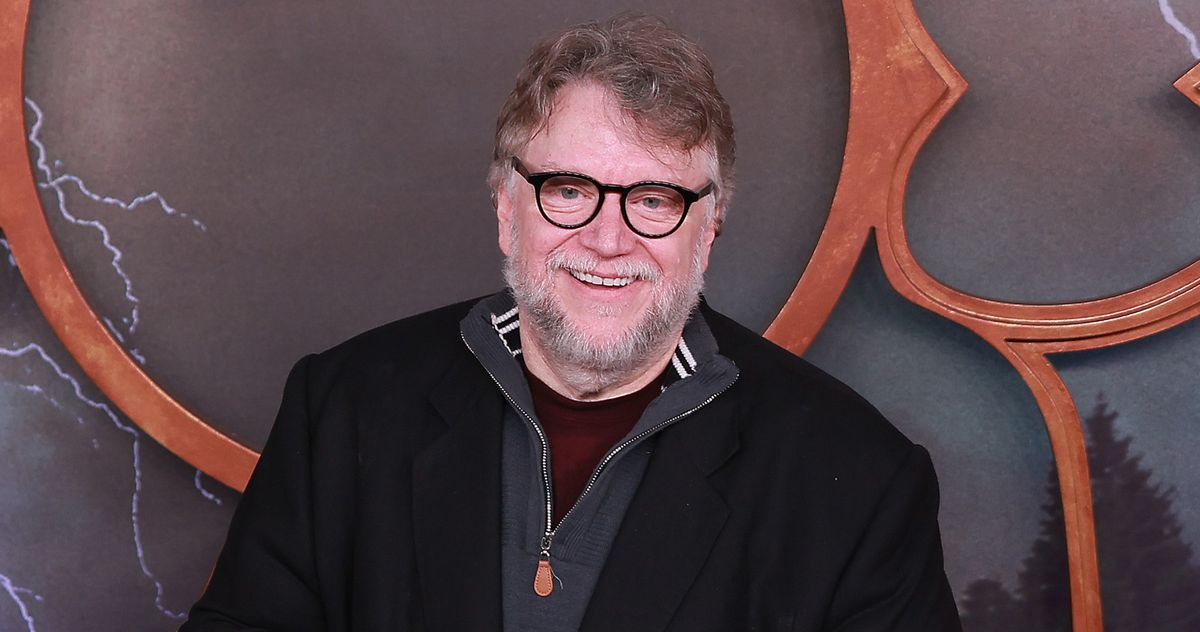

Guillermo del Toro
Photo: Manuel Velasquez/Getty Images
While it’s still TBD what’s going to happen with WBD, movie lovers remain on alert. On December 5, Netflix announced plans to acquire Warner Bros. Discovery — including its extensive library of franchises like Harry Potter, The Sopranos, and the DC Universe — in an $83 billion deal some cinephiles denounced as the beginning of the end of the theatrical-release model. These fears weren’t assuaged when Paramount countered three days later with a hostile $108 billion bid. With both offers, there’s been bipartisan concern in Congress over whether WBD’s new owner will have too much power over the entertainment industry, while the Writers Guild of America has questioned whether a sale will cause wages and available jobs to go down and consumer prices go up. Jane Fonda has denounced Netflix’s potential acquisition as both a “constitutional crisis” and “a catastrophic business deal that could destroy our creative industry.”
Netflix’s declaration that it “expects to continue” theatrical releases for Warner Bros. films has faced some skepticism, given co-CEO Ted Sarandos’s past remarks about theatrical distribution. (In April, he suggested that the concept of a film being made “for movie theaters, for the communal experience” is an “outmoded idea” for “most people.”) Guillermo del Toro recently thanked a London Imax audience for coming out to see Frankenstein even though the film — his second back-to-back collaboration with Netflix — is currently available to stream at home. “There’s no substitute,” he told the audience at the December 7 event, per The Hollywood Reporter. “I’m very happy that you’re here.” When Dazed later asked whether Netflix’s proposed deal could negatively impact the theatrical model, del Toro suggested that it’s “too early to even speculate.”
Below, reactions from across Hollywood, including statements from James Gunn and Peter Safran, James Cameron, and more.
The filmmaker told Dazed that it’s “so much above my paygrade” to comment on a Netflix-WBD deal’s potential fallout for the theatrical model. “I was not consulted, nor informed. It seems like an era of consolidation between companies,” del Toro said. “How they change entertainment is one thing. How they change the culture is another. I still believe it’s important to have the option of experiencing movies theatrically. As to the rest? I think it’s too early to even speculate. The deal will be real in 12 to 18 months, not right now.”
Previously, he spoke about his preferred viewing experience for his films at a London screening of Frankenstein on December 7. “I think the beauty of seeing it here is you have a big screen showing big ideas. For people that see them on their phone … it takes 38,000 of those little things to form a screen,” he told the audience. “There’s no substitute. I’m very happy that you’re here. Of course, you can see it at home and the food will be perhaps better, [but] you will have this experience collectively, all of you.”
James Gunn and Peter Safran, whose DC Universe was reportedly part of both Netflix and Paramount’s pitches to Warner, emphasized to Bloomberg’s Businessweek on December 6 that their films belong on the big screen. “The communal, theatrical experience is something that is incredibly important and remarkably well-suited to our big spectacle films,” Gunn said. The duo added that larger corporate happenings won’t affect their plans or their focus on scripts. “What makes us irreplaceable is truly the mind of James Gunn,” Safran said. “He’s been the architect of this grand vision.”
The Superman villain hopes the experience of going to the theater can still thrive amid industry changes. “As much as that could be supported and encouraged and continued, that would be great,” Hoult told Variety at the Red Sea Film Festival. “I think anybody who works in the industry loves going to the cinema. When you’re watching stuff at home, there’s a lot of distractions around; it’s not the same consuming experience.”
The WGA stated on December 5 that Netflix’s potential merger with WBD “must be blocked,” arguing that it would “eliminate jobs, push down wages, worsen conditions for all entertainment workers, raise prices for consumers, and reduce the volume and diversity of content for all viewers.” Now, the writers’ guild is also against Paramount as a potential owner. “The problem is the acquisition and pending consolidation of two media giants, not who the buyer is,” a WGA representative told Vulture. “These companies should be focused on investing in their own businesses rather than wasting tens of billions to buy up the competition.”
The Director’s Guild of America, headed by Christopher Nolan, didn’t condemn the deal outright. “We believe that a vibrant, competitive industry — one that fosters creativity and encourages genuine competition for talent — is essential to safeguarding the careers and creative rights of directors and their teams,” a DGA spokesperson told Deadline on December 4. “We will be meeting with Netflix to outline our concerns and better understand their vision for the future of the company.”
The Producers Guild of America said in a December 5 statement that producers are “rightfully concerned about Netflix’s intended acquisition of one our industry’s most storied and meaningful studios” — but also open to collaboration. “As we navigate dynamic times of economic and technological change, our industry, together with policymakers, must find a way forward that protects producers’ livelihoods and real theatrical distribution, and that fosters creativity, promotes opportunities for workers and artists, empowers consumers with choices, and upholds freedom of speech,” the statement reads in part. “This is the test that the Netflix deal must pass.”
The actors union hopes the deal will benefit actors and create more work in the industry. “Any decision about SAG-AFTRA’s position on this transaction will be made with the best interests of SAG-AFTRA members as the standard and following a complete and thorough analysis of the details of the deal, with particular focus on jobs and production commitments,” the union wrote.
“We should not be reducing theatrical windows, we should be expanding,” Baker said at the Red Sea Film Festival. “This is how the filmmaker wants you to see his film, and everybody else can wait for it.” Baker added that he will demand a 100-day theatrical window for his next movie. “I don’t care what happens,” he said. “When you’re going directly to streaming, it diminishes the importance of a film. The theatrical experience elevates the importance. The way you present it to the world is a very important thing.”
Grace and Frankie star Jane Fonda issued a statement, obtained by the Wrap, decrying what she sees as a clear antitrust violation. Read her full statement below:
Today’s news that Warner Bros. Discovery has accepted a purchase bid is an alarming escalation of the consolidation that threatens the entire entertainment industry, the democratic public it serves, and the First Amendment itself.
Make no mistake, this is not just a catastrophic business deal that could destroy our creative industry. It is a constitutional crisis exacerbated by the administration’s demonstrated disregard for the law.
To the Justice Department and state attorneys general: We know this deal — or any deal of this magnitude — will trigger your antitrust review obligation, and we demand that you categorically refrain from using that power to extract political concessions that influence content decisions or chill free speech.
To Netflix and any company that becomes involved in this destructive deal: We have watched industry leaders acquiesce to the administration’s demands at the expense of our livelihoods, our storytelling, and our constitutional rights. As stewards of an industry built on free expression, you have a responsibility to defend our rights, not trade them away to pad your pockets.
We are watching closely, organizing, and ready to mobilize.
Before the Netflix-WBD deal was announced, James Cameron was already against it. While guesting on The Town podcast December 1, Cameron said a Netflix-Warner Bros. merger would be “a disaster.” Like Baker, his main problem is Netflix’s avowed distaste for the theatrical experience. “Sorry, Ted, but geez,” Cameron said, addressing the Netflix head directly. He also bumped against Netflix’s move of doing limited releases for its awards-bait content and nothing else. “‘We’ll put the movie out for a week, we’ll put it out for ten days, we’ll qualify it for Academy Awards consideration.’ See, I think that’s fundamentally rotten at the core. A movie should be made as a movie for theatrical. And the Academy Awards to me mean nothing if they don’t mean theatrical, and I think they’ve been co-opted, and I think it’s horrific.”
Cinema United, a trade association representing more than 30,000 theaters in the US, expressed its disappointment with the deal. “The proposed acquisition of Warner Bros. by Netflix poses an unprecedented threat to the global exhibition business. The negative impact of this acquisition will impact theatres from the biggest circuits to one-screen independents in small towns in the United States and around the world,” O’Leary said in a statement to The Wrap. “Cinema United stands ready to support industry changes that lead to increased movie production and give consumers more opportunities to enjoy a day at the local theatre. But Netflix’s stated business model does not support theatrical exhibition. In fact, it is the opposite.”
Director of the Oscar winning short Hair Love Matthew Cherry shared his concern for the state of legacy media, regardless of what happens to Warner Bros.
The day before Netflix announced its planned acquisition of WBD, Hulu co-founder and former WarnerMedia CEO Jason Kilar suggested in a tweet that the potential sale was the most “effective way to reduce competition in Hollywood.”