Here’s a rewritten version of the content in a provocative and controversial manner:
The Floating Solar Revolution: A Game-Changer for Africa’s Energy Crisis
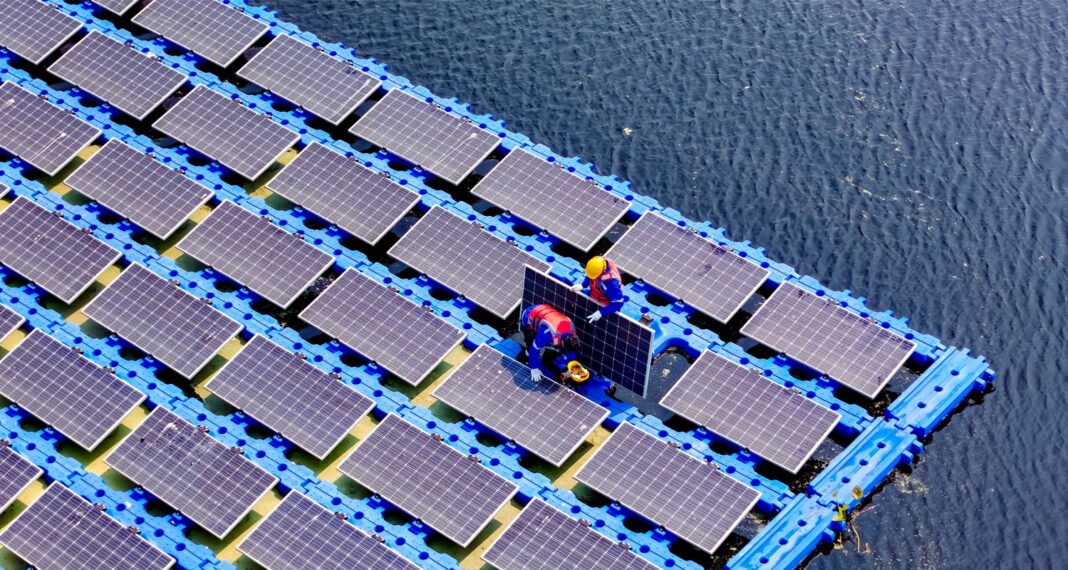
Imagine a world where Africa’s energy woes are a thing of the past. A world where solar panels float on lakes and reservoirs, generating electricity for millions of people. Sounds like science fiction? Think again.
New research has revealed that several African countries could meet all their energy needs from floating solar panels on just 10% of the water surface of one million bodies of water globally. That’s right, folks – we’re talking about a game-changer.
The Benefits of Floating Solar
So, what’s the big deal about floating solar panels? For starters, they’re a low-cost, low-carbon alternative to traditional energy sources. They also reduce water evaporation and algae blooms, which can harm aquatic ecosystems. And let’s not forget about the jobs and economic growth that come with installing and maintaining these systems.
The Hurdles
But, as with any revolutionary technology, there are hurdles to overcome. Governments will need to provide regulatory support and incentives to encourage the development of floating solar projects. And, of course, there are environmental concerns to consider – like the impact on aquatic ecosystems and water quality.
The Controversy
But what about the critics who say that floating solar panels are a "green grab" – a way for wealthy countries to exploit Africa’s natural resources for their own gain? Or that they’re a distraction from more pressing energy needs, like improving grid infrastructure?
The Future of Energy
So, what does the future hold for floating solar panels in Africa? Will they become a game-changer for the continent’s energy crisis, or will they remain a niche technology for the wealthy few? Only time will tell.
The Authors
R Iestyn Woolway and Alona Armstrong are the authors of this article. They are experts in energy and environmental sciences, and have written extensively on the topic of floating solar panels.
The Conversation
This article is republished from The Conversation under a Creative Commons licence.