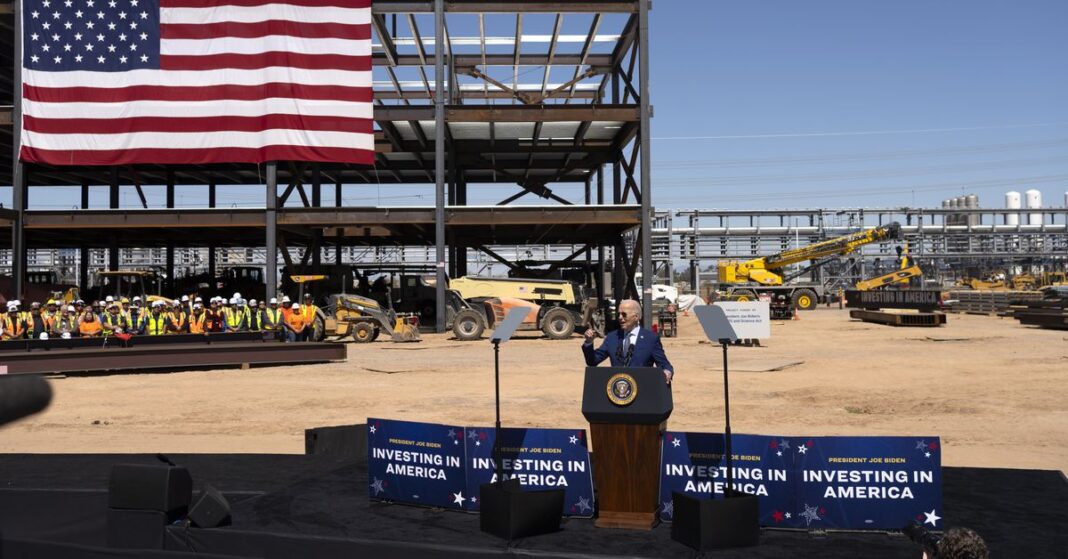

Biden’s Chip Bonanza Puts Toxic Secrets in the Dark
As the Biden administration injects billions of dollars into the semiconductor industry, a coalition of labor unions and environmental groups is sounding the alarm: the push for "innovation" is hiding a toxic secret. The groups claim that the new chip factories being built across the US are shrouded in secrecy, with manufacturers refusing to reveal the hazardous substances they’ll be using, and the environmental risks they’ll pose to nearby communities.
The Sierra Club, Communications Workers of America, and other influential organizations have submitted comments to the Department of Commerce, urging them to conduct more thorough environmental reviews for the new projects. They’re not asking to stop the factories from being built, but to make sure that the industry avoids the same mistakes of the past.
"We’re not objecting to the existence of these plants. We know they’re going to have to use hazardous substances," says Lenny Siegel, executive director of the Center for Public Environmental Oversight. "But one of our biggest problems is the lack of transparency."
Siegel is part of CHIPS Communities United, a coalition that has formed to hold semiconductor manufacturers accountable to communities where they set up shop. The group is pushing for more detailed environmental impact statements, community benefits agreements, and stipulations for environmental and health protections in contracts with companies.
The stakes are high. The CHIPS and Science Act, passed in 2022, created $52.7 billion in funding for chip manufacturing, with more than half of that money already distributed to eight companies building factories in 10 states. Private companies have committed an additional $395 billion to new semiconductor and electronics manufacturing in the US since 2021.
But as the industry expands, so do the concerns. The coalition is worried about the lack of regulations on greenhouse gas emissions, air quality, and hazardous substances. They’re also concerned about the cumulative effects of building multiple manufacturing facilities near each other.
"We posted the draft [environmental assessments] for public comment to provide transparency and facilitate the public’s input in this process," said CHIPS communications director, Geoff Burgan, in a statement. "CPO will carefully consider all public comments received during the comment period as we work to finalize the NEPA process."
In other words, the Department of Commerce has to take all of these concerns into consideration as it finalizes its environmental reviews. Last year, there was a failed attempt to exempt new chip factories from NEPA altogether.
"We believe that the people who work in the plants and live nearby have a right to know what they’re using," Siegel says. "So do others trying to figure out where to build a new home or childcare center, he adds. "People and planners need to have this information."

Author: Kayitsi.com